
Few subjects have generated more misunderstanding among Catholics than religious liberty. For some, it is viewed as a purely American political concept imported into Catholic thought. For others, it is considered self-evidently compatible with the Gospel and therefore beyond serious discussion. Both positions fail to appreciate the richness of the Church’s engagement with this question.
No twentieth-century Catholic thinker devoted more attention to this issue than Father John Courtney Murray, S.J. His reflections on religious freedom, pluralism, and democratic society remain strikingly relevant in our own moment.
Murray’s starting point was what he called the “American Proposition.” The United States, he argued, was founded upon certain truths regarding the dignity of the human person, the nature of political authority, and the rights of conscience. These truths were not merely practical arrangements designed for political convenience. They were moral affirmations rooted in a conviction that objective truth exists and can be known by human reason.
This point is often forgotten. Contemporary discussions frequently portray the American experiment as grounded in relativism. According to this interpretation, religious freedom exists because no one can know the truth and therefore all beliefs are equally valid. Murray rejected such reasoning entirely. He believed religious liberty depended not upon skepticism but upon confidence in human dignity.
The distinction is crucial. The right to religious freedom does not arise because truth is unknowable. Rather, it arises because the human person possesses a dignity that forbids coercion in matters of conscience. Truth can compel by its own intrinsic force, but it cannot be imposed by governmental power.
This insight eventually found authoritative expression in the Second Vatican Council’s Declaration on Religious Freedom, Dignitatis Humanae. There the Council taught that the right to religious freedom is grounded in the dignity of the human person and must be recognized in civil law. Such language is so familiar today that it is easy to forget how revolutionary it once seemed.
Yet Murray’s achievement was not simply theoretical. He was grappling with a practical reality that Catholics in the United States had long experienced. America was — and remains — a pluralistic society. Citizens hold divergent and often incompatible religious beliefs. The challenge is how such people can live together peacefully without surrendering their deepest convictions.
Murray believed the answer lay in distinguishing between theological agreement and political consensus. Citizens do not need to agree about every religious question in order to share civic life. They do, however, need agreement on certain fundamental principles concerning justice, freedom, and the common good. These principles form the basis of what Murray called the public consensus necessary for democratic life.
Such a vision appears increasingly fragile today. Political discourse has become more polarized. Religious believers often feel marginalized in public life. Secular voices frequently suspect religious participation in civic affairs, while religious communities sometimes retreat into their own ideological enclaves. The result is a society characterized less by dialogue than by mutual suspicion.
Murray would have regarded this development as deeply troubling. He understood that pluralism is not merely a fact; it is a project. Living together amid profound differences requires patience, intellectual honesty, and a willingness to engage others respectfully. A pluralistic society cannot survive if its citizens lose the capacity for civil conversation. In this regard, Murray’s insights may be even more necessary today than when he first proposed them.
The Catholic contribution to public life is not the imposition of doctrine through political power. Neither is it the privatization of faith. Rather, Catholics are called to bring the wisdom of the Gospel into the public square through reasoned argument, moral witness, and charitable engagement.
This approach requires confidence both in faith and in reason. Catholics need not choose between loyalty to the Church and participation in democratic society. Murray spent much of his life demonstrating that such a choice is false. Properly understood, the Catholic intellectual tradition possesses abundant resources for supporting human dignity, religious freedom, and responsible citizenship.
At a time when freedom is often confused with autonomy and conscience with personal preference, Murray’s vision offers an important corrective. Freedom exists for truth. Conscience exists to seek truth. Political institutions exist to protect the dignity of persons as they pursue truth. These convictions remain essential not only for Catholics but for the health of democratic society itself.
John Courtney Murray believed that the American experiment and the Catholic tradition could enrich one another. More than half a century after his death, that conviction remains worthy of renewed reflection. Indeed, in an age marked by division, polarization, and distrust, it may be one of the most important conversations we can have.
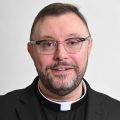 About Rev. John P. Cush, STD
John,
Thank you for a much-needed clarification of liberty. How do we see Catholic Social Teaching as proposed on human rights and liberty by John Courtney Murray in countries without a democratic tradition?
Thanks, Tom. I think the key distinction is that John Courtney Murray’s defense of human rights and religious liberty should not be confused with an attempt to export American democracy. For Murray, and ultimately for Dignitatis Humanae, human rights do not arise from democracy or from the generosity of the state; they arise from the dignity of the human person. The state does not create these rights and therefore cannot simply take them away.
This is particularly important in countries without a democratic tradition. Catholic Social Teaching does not demand that every nation adopt an American or Western political model. It does insist, however, that every political order recognize limits to its authority. The human person, the family, conscience, religious communities, and the natural moral law possess a dignity and integrity prior to the state. Political authority exists for the common good, not the other way around.
Murray’s lasting contribution, then, is not the claim that Catholicism requires democracy, but that no state has absolute sovereignty over the human person. Different cultures may embody that principle in different political structures, but the fundamental Catholic principle remains: authentic liberty is grounded in truth, human dignity, and our ultimate destiny in God.