Introduction
St. Thomas Aquinas, in his summa theologiae, distinguishes three types of law: the Natural Law, the Old Law, and the New Law. While there are more laws than these, these particular laws each present not only truth and law, but they also are a journey of salvation history. While these three Laws are not the same and are distinct from each other, they are not completely disconnected. Instead, they are an unfolding of God’s revealed truth to mankind, building up to its perfect completion in the New Law. Indeed, the New Law, promulgated by Jesus Christ, perfects and transcends the Old Law and the Natural Law. All of them point to Jesus, who fulfilled the precepts of the Old Law, culminating in His passion.1
This essay will show how the New Law does this. The New Law internalizes the Old Law through grace and charity and offers a perfect path to holiness and union with God. This essay will do this by first defining the Natural Law, the Old Law, and the New Law. Then this essay will compare the New Law with the Old Law and with the Natural Law, paying special attention to the unique characteristics of the New Law. In this section, consideration will also be given to the connections that the New Law has with Natural Law and Old Law. Finally, this essay will look at the process of the unfolding and perfecting of the Law, particularly as the New Law being the perfection of the Law.
Defining the Three Laws
To begin with understanding the Natural Law, the Old Law, and the New Law, one must first look at the Eternal Law (lex aeterna). Law as law is an order of reason from a ruler governing a community.2 The entire universe is governed by God’s reason, with God as the governing ruler. Thus, there is a law for the right ordering of the universe. Because God’s reason is not temporal but rather eternal, this law is called the Eternal Law.3 This can be contrasted to the laws of man, which are temporal and restricted to the area in which man governs. Understanding the Eternal Law, one can begin to view the manner in which the Eternal Law has entered into human history: the Natural Law, the Old Law, and the New Law.
The Natural Law is the oldest of the three aforementioned Laws. The Natural Law is rational man’s partaking in the Eternal Law, a “participation in eternal law on the part of a rational creature.”4 Importantly, it is the Eternal Law as discovered and discernible through man’s reason, and with this reason man finds the “fundamental orientations of moral action in conformity with the very nature of the human subject.”5 In the light of natural human reasoning, man discerns certain truths contained in the Eternal Law: what is good and what is evil.6 Because the Natural Law is common to all rational men, and because it discerns the Eternal Law, the Natural Law is applicable to every culture, nation, and religion.7 The Natural Law is thus universal and immutable, applicable to all peoples at all times and in each of us.8 How Natural Law is discerned, however, also creates its limits, as it is dimmed by sin as well as constrained to those matters accessible through reason.9
Having looked at the Natural Law, which is God’s wisdom directing all things toward their proper end, one may now move to the Old Law and the New Law. However, in moving to the Old Law and the New Law, one must first analyze the Divine Law (lex divina). While the Natural Law is discernible by man’s natural use of human reasoning, the Divine Law reveals what is disproportionate to man’s natural ability, specifically regarding man’s end: eternal beatitude.10 These additional principles, added and beyond Natural Law and man’s discernibility through reason, is Divine Law.11 While Natural Law can be seen as the application of the Eternal Law, the Old Law and the New Law could be seen as the application of the Divine Law.12 Thus, the Eternal Law directs man in the natural use of human reasoning, whereas the Divine Law directs man where natural reason falls short. The lex divina goes beyond the lex aeterna.
The Eternal Law does not and cannot change. It is eternally true that man should not murder. This is the Eternal Law of God, written on the hearts of all men, regardless of place or time. The Divine Law clearly is subject to change in a sense, just as God’s revelation to mankind has evolved over time. The Old Law and the New Law are subject to this evolving revelation of God, as God further reveals Himself to man, especially in the man Jesus Christ.
The Old Law was an ordering of the external acts of man, directing them into a “sensible and earthly good.”13 Unlike the Natural Law, which was written on the hearts of man from the beginning, the Old Law was given to Moses.14 This does not mean that the Old Law was unreasonable; rather, it was consistent with reason while also being revealed by God.15 Also of import is that the Old Law was given specifically to the Jews, not naturally discernible by human reason and therefore for all peoples.16 Unlike the Natural Law, which are entirely moral precepts, the Old Law can be divided into the moral precepts, the ceremonial precepts, and the judicial precepts.17
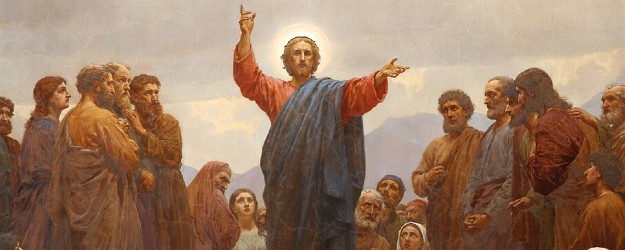
The New Law is the law promulgated by Jesus Christ, as a result of the ultimate revelation of God.18 In the New Law, the Divine Law — the law revealed by God — is fulfilled and completed and perfected.19 Through Christ, the New Law becomes an interior law, elevated by charity. (CCC, 1965) The New Law, the law of the New Covenant and the Gospel, is written on the heart.20 Although written on the heart, it is not solely found there (like the Natural Law) as one is instructed on it through the word in spoken and written form: Sacred Scripture and Sacred Tradition.21
In this way, the New Law is law in two respects: the indwelling Holy Spirit enlightening man’s intellect on what man should morally do and also the effect of the Holy Spirit in inclining man to goodness in “faith working through love.”22 The New Law is therefore the “very grace of the Holy Spirit” which comes from faith in Jesus Christ.23 The effect of the law is to dispose man to receive and use grace.24 The New Law is an internal transformation in charity, best expressed in the Sermon on the Mount and summarized in the two similar and greatest of commands: love God and love neighbor.25
The New Law Compared to the Natural Law and the Old Law
Similarities
Two ideas must be held in tension when comparing the New Law to the Natural Law and to the Old Law. The first is that the New Law is not wholly separate from either. All of it refers us to “the one and the same God.” (Veritatis Splendor, §45) Even Natural Law, with its natural human reason, creates in man “a natural inclination toward knowing the truth about God.”26 God wrote reason on the hearts of man, God gave the Old Law to Moses, and God Himself is the New Law. These three Laws “support each other and intersect. They have their origin and goal in the eternal, wise and loving counsel.” (Veritatis Splendor, §45) Indeed, the New Law could not “bring [the Old Law] to perfection” if it were wholly separate from — and unrelated to — it. (CCC, 1984) So, too, for Natural Law, which the grace of the New Law does not destroy but rather “heals, strengthens, and leads it to its full realization.”27 The New Law provides the grace and power of the Holy Spirit to fulfill the Natural Law more perfectly.28
The New Law does not jettison reason, and it cannot so jettison because man’s reason was given to him by God to lead man to truth. Instead, the New Law takes the Natural Law beyond its limits, “realiz[ing] the natural law in an eminent manner.”29 It “assumes and fulfills the requirements of the natural law” However, natural reason is not enlightened on its own by the light of faith, and it therefore needs the New Law to bring it to complete truth. The New Law helps make clear the Natural Law, which can become obscured by sin and evil.30 The light of reason of man’s intellect in Natural Law is further enlightened by the grace through faith of the New Law.31
Just as the New Law is not unrelated to the Natural Law, so too is the New Law not unrelated to the Old Law. The Old Law acts as the groundwork and preparation for the New Law, beginning the work of liberation from sin which will find its ultimate completion in the New Law. (CCC, 1964) One purpose of the Old Law, for example, was to pull man from idolatry and back to God, and therefore “ordered men toward Christ in the manner of a disposition.”32
The Old Law is the “first stage of revealed Law,” with the New Law being a fulfillment thereof. (Compendium, 418) Something cannot prepare or dispose another to something wholly unrelated to it, so the Old Law “prepared and disposed one for conversion and for the acceptance of the Gospel.” (Compendium, 419) The Old Law, like the New Law, did not jettison reason, but rather was “consonant with right reason.”33
Differences
At the same time, the New Law is not merely a different type of Old Law or Natural Law, and this is the second tension: the New Law is distinct from the Natural Law and the Old Law. St. Thomas writes that the Old Law and the New Law are diverse not that they are wholly and absolute different as if they had different ends. Rather, the New Law orders man more closely to his end than the Old Law.34 The Old Law could not do what the New Law does. While the Old Law commanded charity, it did not give the grace of the Holy Spirit,35 which brings true supernatural charity into the hearts of man. (CCC, 1964) The New Law perfects the Old Law, and in this way they are distinct.36
Only something imperfect can be made perfect, and only something lacking fulfillment can be fulfilled.37 As a result, while the Old Law was good, it was imperfect goodness because it could not lead man to his ultimate end: eternal happiness.38 The ceremonial precepts did not confer grace; only the New Law does this.39 The Old Law governed external acts, while preparing for “the interior law of charity.” (CCC, 1965) The New Law governs “an interior reality: the grace of the Holy Spirit which makes possible such love.” (Compendium, 420) It is a real transformation in the New Law, “reforming the heart, the root of human acts.” (CCC, 1984) It is not merely the external good acts of man, but now the interior reality matching the external. The Old Law could not confer sanctifying grace, only the New.40 So while the Old Law prefigured in its ceremonial precepts man’s justification, it is only the New Law which confers this through the power of Christ’s passion.41
So while the Natural Law, the Old Law, and the New Law are divinely given, and the Old Law and the New Law are divinely revealed and provide moral guidance, they do not all have the same effect. The Old Law is primarily external and preparatory, while the New Law is internal, transformative, and fulfills the Old Law. (CCC, 1964, 1984) The Old Law did not give the Holy Spirit, only the New. (CCC, 1964) The New Law is the grace of the Holy Spirit, received by faith in Jesus Christ, operating in charity.42 The New Law is internalized while the Old Law is external.
Another important difference is that the Old Law was only given to the Jewish people.43 Therefore, only the Jews were required to observe and keep it.44 The Natural Law, which is discernible by natural human reason, obligates all man to follow it,45 and the New Law is offered to all men (rather than being written on their hearts by virtue of having reason). The Church, not Moses, receives and preserves the New Law. (Veritatis Splendor, §45) The New Law is given at all times in all places for all peoples.46 The New Law is thus the widest of the Laws. Natural Law is limited by sin and evil, and cannot go beyond natural human reasoning. The Old Law is limited by its time and the people to whom it was given. The New Law, however, is available to all persons in all cultures in all places.
Conclusion
The New Law frees man from sin and death. It unburdens man from the Old Law.47 The three Laws are not wholly separate and diverse, unrelated to one another. Instead, they slowly unfold God’s relation to mankind and His revelation. God creates all man with natural reason, inclining man towards good. However, as a result of sin, man’s reason becomes weakened and dark, making such discerning harder. In the Old Law, God gave at a particular time and place a law geared toward providing a foundation and preparation for the New Law. This Old Law was not completely effective, unable for example to confer sanctifying grace. The New Law came in Jesus, and unlike the Old Law it shall not pass away.48
- Thomas Aquinas, Summa theologiae, I-II, q. 107, a. 2, respondeo, at Alfred J. Freddoso, www.Freddoso.com. ↩
- ST, I-II, q. 91, a. 1, respondeo. ↩
- ST, I-II, q. 91, a. 1, respondeo. ↩
- ST, I-II, q. 91, a. 2, respondeo. ↩
- International Theological Commission, In Search of a Universal Ethic: A New Look at the Natural Law (2009), §9. ↩
- ST, I-II, q. 91, a. 2, sed contra, and q. 94, a. 2, respondeo. ↩
- In Search of a Universal Ethic, §9. ↩
- ST, I-II, q. 91, a. 2, respondeo. ↩
- Compendium of the Catechism of the Catholic Church, 416–417, at The Holy See, www.Vatican.va. ↩
- ST, I-II, q. 91, a. 4, respondeo. ↩
- ST, I-II, q. 91, a. 4, ad. 2. ↩
- ST, I-II, q. 91, a. 5, respondeo. ↩
- ST, I-II, q. 91, a. 5, respondeo. ↩
- ST, I-II, q. 98, a. 6, respondeo. ↩
- ST, I-II, q. 98, a. 1, respondeo. ↩
- ST, I-II, q. 98, a. 4, respondeo. ↩
- ST, I-II, q. 99, a. 2 – a. 4. ↩
- ST, I-II, q. 106, a. 4, ad. 3. ↩
- Compendium of the CCC, 420, and Catechism of the Catholic Church, 1965, at The Holy See, www.Vatican.va. ↩
- ST, I-II, q. 106, a. 1, sed contra. ↩
- ST, I-II, q. 106, a. 1, respondeo. ↩
- Pope John Paul II, Encyclical on Some Fundamental Questions of the Church’s Moral Teaching Veritatis Splendor (6 August 1993), §45. ↩
- ST, I-II, q. 106, a. 1, respondeo. ↩
- ST, I-II, q. 106, a. 1, respondeo. ↩
- See generally CCC, 1965, and Compendium of the CCC, 420. ↩
- ST, I-II, q. 94, a. 2, respondeo. ↩
- In Search of a Universal Ethic, §101. ↩
- In Search of a Universal Ethic, §102. ↩
- In Search of a Universal Ethic, §102. ↩
- In Search of a Universal Ethic, §102. ↩
- In Search of a Universal Ethic, §112. ↩
- ST, I-II, q. 98, a. 2, respondeo. ↩
- ST, I-II, q. 98, a. 1, respondeo. ↩
- ST, I-II, q. 107, a. 1, respondeo. ↩
- Compendium of the CCC, 419. ↩
- ST, I-II, q. 91, a. 5, respondeo. ↩
- ST, I-II, q. 107, a. 2. ↩
- ST, I-II, q. 98, a. 1, respondeo. ↩
- ST, I-II, q. 98, a. 1, ad 1. ↩
- ST, III, q. 62, a. 6, respondeo. ↩
- ST, I-II, q. 107, a. 2. ↩
- ST, I-II, q. 108, a. 1, respondeo. ↩
- ST, I-II, q. 98, a. 4, respondeo. ↩
- ST, I-II, q. 98, a. 5, respondeo. ↩
- ST, I-II, q. 98, a. 5, respondeo. ↩
- ST, I-II, q. 106, a. 3, ad. 2. ↩
- ST, I-II, q. 107, a. 4, respondeo. ↩
- ST, I-II, q. 106, a. 4, sed contra. ↩
 About Brett Adams
Thanks Brett. Really solid article and a topic I was specifically wondering about very recently. I graduated from HACS. Great place.