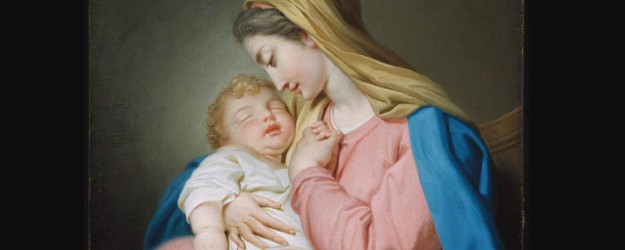
The Incarnation in God’s Eternal Plan
Question One: What is the reason why the Incarnation of the Second Person of the Trinity, the Son, took place? Was it a rescue mission or was it all part of God’s plan from the beginning? Why did Jesus have to be born when he was and not now when we really could use him?
Answer: The mystery of the Incarnation — the eternal Word becoming flesh (John 1:14) — stands at the heart of Christian faith. The question of why the Son of God became man has long been central to theology, debated among the Fathers, the Scholastics, and in the Magisterium. Was the Incarnation merely a “rescue mission” after the fall of Adam, or was it part of God’s eternal plan from the beginning? And why did Christ come when He did, rather than in another age? Catholic theology affirms both the primacy of Christ in God’s eternal design and the salvific necessity of the Incarnation at the appointed “fullness of time.”
Scripture testifies that the Incarnation was not an afterthought but part of God’s eternal will. St. Paul writes that God “chose us in him before the foundation of the world” (Eph 1:4) and that His purpose was “to unite all things in him, things in heaven and things on earth” (Eph 1:10). This indicates that Christ was the center of God’s plan for creation from the beginning. St. Irenaeus taught that the Word’s assumption of flesh was intended “so that what we had lost in Adam — that is, being in the image and likeness of God — we might recover in Christ Jesus” (Against Heresies III.18.1).
St. Thomas Aquinas asked directly whether the Word would have become incarnate if man had not sinned (ST III, q.1, a.3). His conclusion was that “the work of the Incarnation is ordained by God as a remedy for sin, so that, if sin had not existed, the Incarnation would not have been” (ST III, q.1, a.3, corpus). Aquinas emphasizes that the Incarnation is primarily medicinal: Christ came to heal, redeem, and restore fallen humanity. Yet Aquinas also acknowledges God’s freedom: “The power of God is not limited to this; even had man not sinned, God could have become incarnate” (ibid., ad 3). Thus, for Aquinas, while the Incarnation was motivated by sin, it remains an expression of God’s absolute love.
Bl. John Duns Scotus (1266–1308), a Franciscan, argued a different perspective: that the Incarnation was not conditioned on sin but was the supreme purpose of all creation. For Scotus, God’s ultimate intention was the glorification of Himself in Christ, the perfect creature, irrespective of the fall. He writes: “Even if no one had fallen, neither angel nor man, Christ would still have been predestined in the same way” (Ordinatio III, d.7, q.3). This view is often called the “absolute primacy of Christ.” It emphasizes that the Incarnation is the greatest possible manifestation of God’s glory and was therefore always part of the divine plan.
The Catholic Church has never dogmatically resolved this debate. The Council of Trent (1547) defined the necessity of Christ’s Incarnation for salvation, but it did not address whether the Incarnation would have taken place apart from sin. Both Thomist and Scotist schools are permitted within Catholic theology. The Catechism of the Catholic Church unites both emphases when it teaches: “The Word became flesh for us in order to save us by reconciling us with God” (CCC §457) and also “The Word became flesh so that we might know God’s love” (CCC §458), suggesting that redemption and revelation together explain the Incarnation.
Why, then, did Christ come when He did, and not in another age? St. Paul provides the key: “When the fullness of time had come, God sent his Son, born of a woman, born under the law, to redeem those who were under the law” (Gal 4:4–5). The Fathers interpreted this “fullness” as the moment when humanity was prepared historically, culturally, and spiritually for the coming of the Messiah. St. Augustine explains that God, in His providence, prepared the world through the Roman Empire’s unity, the spread of the Greek language, and the moral pedagogy of the Law: “He was not born before because the time had not yet come, but when the fullness of time was ripe, He was born” (Sermon 185.1). Aquinas agrees, teaching that Christ came at the time most fitting for the manifestation of divine wisdom: “It was most fitting that the Incarnation should have been deferred until the fullness of time.”
Finally, why did Christ not come in our own age, “when we really could use him”? Catholic theology reminds us that the Incarnation was a once-for-all event. The eternal Word entered time at the moment chosen by the Father, and Christ’s redeeming work is perpetually present through the Church and the sacraments. As the Letter to the Hebrews insists: “Christ has appeared once for all at the end of the age to remove sin by the sacrifice of himself” (Heb 9:26). The Holy Spirit continues Christ’s presence today: “Lo, I am with you always, to the close of the age” (Matt 28:20). Vatican II affirms that Christ remains sacramentally and mystically present in the Church: “Christ is always present in his Church, especially in her liturgical celebrations” (Sacrosanctum Concilium §7).
The Incarnation of the Son was at once the eternal plan of God and His merciful response to human sin. Aquinas emphasizes that it was principally a remedy for sin (ST III, q.1, a.3), while Scotus stresses that it was the ultimate goal of creation regardless of sin (Ordinatio III, d.7, q.3). The Magisterium allows both perspectives, since both affirm Christ as the center of God’s plan. Jesus came in the “fullness of time” (Gal 4:4), when the world was prepared by providence to receive Him, not earlier or later. Though we may feel acutely today that “we could use him,” Catholic theology insists that He is with us still — in His Word, in the Eucharist, and in the living Church. The timing of His birth was perfect in God’s wisdom, and the fruits of the Incarnation remain present until the consummation of all things.
Converts from Judaism and Jewish Customs
Question Two: If someone is a convert from Judaism to Catholicism, would it be wrong for them to celebrate all the Jewish religious feasts and to keep Kosher?
Answer: The question of whether a convert from Judaism to Catholicism may continue to observe Jewish feasts and keep kosher touches on the heart of Catholic theology concerning the fulfillment of the Old Covenant in Christ. Catholic dogmatic theology, drawing upon Scripture, the Fathers, Aquinas, and the Magisterium, affirms both the abiding dignity of Israel and the definitive fulfillment of the Law in Christ. The answer requires a careful distinction: while Jewish practices may be valued culturally or devotionally, they cannot be observed as though still binding for salvation or as necessary elements of Christian life.
The New Testament is clear that the Mosaic Law, while holy and good, reached its consummation in Christ. St. Paul teaches: “Christ is the end (telos) of the law for righteousness to everyone who believes” (Rom 10:4). In Galatians, he insists that “we are justified by faith in Christ and not by works of the law” (Gal 2:16). With respect to dietary laws and holy days, Paul exhorts the Colossians: “Let no one pass judgment on you in questions of food and drink or with regard to a festival or a new moon or a sabbath. These are only a shadow of what is to come; but the substance belongs to Christ” (Col 2:16–17). The Letter to the Hebrews develops the same point, showing that the sacrifices and feasts of Israel were “a shadow of the good things to come instead of the true form of these realities” (Heb 10:1).
At the same time, the New Testament recognizes the pastoral complexity of Jewish converts. Acts 21:20–26 shows Paul himself participating in Jewish rituals for the sake of peace with Jewish Christians, while insisting elsewhere that such practices are not binding (cf. Gal 5:1–6). Thus, the apostolic witness already provides a distinction between cultural or prudential observance and theological necessity.
The Fathers of the Church consistently taught that the ceremonial precepts of the Old Law had been fulfilled and were no longer binding after Christ. St. Augustine explains: “The sacraments of the Old Testament were promises of the Christ to come; our sacraments are testimonies that Christ has come” (Contra Faustum XIX.13). Likewise, St. John Chrysostom, in his homilies Adversus Judaeos, warns Christians not to return to Jewish ritual observances, not because they are evil, but because they have been surpassed in Christ. For the Fathers, participation in Jewish feasts as salvifically necessary was incompatible with Christian faith, though they acknowledged the holiness of Israel’s role in salvation history.
St. Thomas Aquinas provides the most precise theological account. In the Summa Theologiae (I-II, q.103, a.3), he distinguishes the three types of precepts in the Old Law: moral, judicial, and ceremonial. The moral precepts (e.g., the Ten Commandments) remain binding, for they reflect the natural law. The judicial precepts, tied to Israel’s governance, are no longer binding but may have historical interest. The ceremonial precepts, which prefigured Christ, “ceased at the coming of Christ” and to observe them as though necessary “would be a mortal sin” (ST I-II, q.103, a.4). However, Aquinas adds that they may be observed “not as though necessary, but as a certain custom,” provided this does not cause scandal or confusion (ST I-II, q.103, a.4, ad 3). Thus, a Catholic convert from Judaism may honor their heritage, but cannot do so as though the Mosaic Law still binds them in conscience.
The Catholic Church affirms both the definitive fulfillment of the Old Covenant and the enduring dignity of the Jewish people. The Council of Florence (1442) declared: “The legal prescriptions of the Old Testament . . . ceased, and the sacraments of the New Law began” (Cantate Domino). At the same time, Vatican II’s Nostra Aetate (§4) emphasized the enduring covenantal role of Israel: “God holds the Jews most dear for the sake of their Fathers; he does not repent of the gifts he makes.” John Paul II frequently called Jews “our elder brothers” (Address in Rome, April 13, 1986). The Magisterium thus rules out supersessionism while also insisting that salvation comes only through Christ, the fulfillment of the Law.
From a pastoral perspective, a Jewish convert may find value in maintaining cultural ties to Judaism. Celebrating Passover as a family meal, observing Hanukkah as a remembrance of God’s fidelity, or following kosher practices for cultural reasons can deepen gratitude for the roots of Christian faith. These may serve as pedagogical reminders of Christ’s fulfillment of the Law. However, to observe them as religious obligations would contradict Catholic faith, since “the Law was our custodian until Christ came” (Gal 3:24). A Catholic pastor, therefore, should guide converts to distinguish between honoring heritage and binding oneself to obsolete ceremonial precepts.
For the Catholic convert from Judaism, it is not wrong to celebrate Jewish feasts or keep kosher as cultural expressions of identity and gratitude for salvation history. What is impermissible is to treat these observances as religiously necessary for justification or as parallel to the sacraments. Aquinas’s distinction between observing “as necessary” (which is grave error) and observing “as custom” (which may be permissible with prudence) provides the clearest framework (ST I-II, q.103, a.4). The Church honors the Jewish people and their traditions (Rom 11:28–29; Nostra Aetate §4), but she confesses that the Law has been fulfilled in Christ, who is Himself the true Pasch (1 Cor 5:7). The pastoral task is to encourage converts to cherish their heritage while rejoicing in the fullness of the New Covenant, where the shadows have given way to the light of Christ.
 About Rev. John P. Cush, STD

Speak Your Mind