
Catholic Heroes of Civil and Human Rights: 1800s to the Present. By Matthew Daniels and Roxanne King. Reviewed by Rev. John J. Conley, S.J. (skip to review)
You Visited Me: Grace and Healing in the Modern Medical Center. By Robert Collins. Reviewed by Christopher Siuzdak. (skip to review)
Cardinal Nguyễn Van Thuan: Man of Joy and Hope. By Elisabeth Nguyen Thi Thu Hong and Stefaan Lecleir. Reviewed by Maria Cintorino. (skip to review)
Cathedral Basilica of Saint Louis: An Illustrated Timeline. By John Guenther. Reviewed by Trent Beattie. (skip to review)
Catholic Heroes of Civil and Human Rights – Matthew Daniels and Roxanne King
Daniels, Matthew and Roxanne King. Catholic Heroes of Civil and Human Rights: 1800s to the Present. San Francisco: Ignatius Press, 2024. 205 pp.
Reviewed by Rev. John J. Conley, S.J.
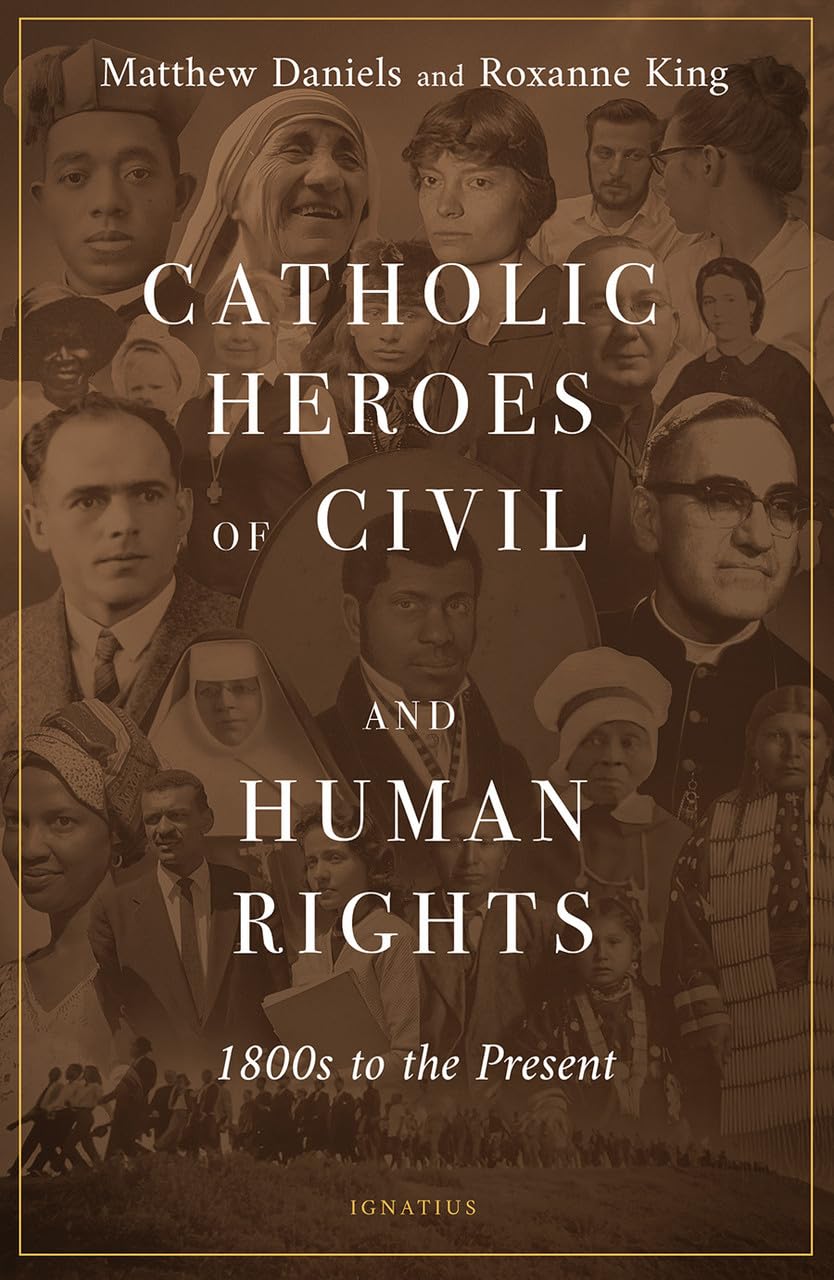 This volume provides concise biographical sketches of sixteen Catholics prominent in various civil rights and human rights movements.
A number of the figures profiled will be familiar to readers. Saint Teresa of Calcutta (1910–1997) founded the Missionaries of Charity for service to the poorest of the poor. Saint Katharine Drexel (1858–1955) founded the Blessed Sacrament Sisters to serve the African American and Native-American populations. Archbishop of Washington, Cardinal Patrick O’Boyle (1896–1987) insisted on the desegregation of diocesan schools and hospitals from his first day in office. Dorothy Day (1897–1980) founded the Catholic Worker movement, with its distinctive blend of pacifism, anarchism, and civil disobedience. Saint Oscar Romero (1917–1980) paid the price of martyrdom for his opposition to the death squads of El Salvador.
Of special interest are the portraits of lesser-known Catholic activists. An African-American laywoman, Diane Nash (born 1938) was prominent in nonviolent civil-disobedience actions against segregation in the South. Known for his earlier animist writings, Nicholas Black Elk (1863–1950) zealously pursued his later role as a Catholic catechist for Native Americans. Denver’s Julia Greeley (1848–1918) reached across the color barrier to help imperiled poor people at great cost to herself. Originally from the Midwest, the layman Paul Bokulich (born 1938) went to Selma to march with Martin Luther King and stayed to work at poverty wages for the Southern Christian Leadership Conference.
The portraits are helpfully grouped under five goals and virtues of religion-inspired social activism: freedom, perseverance, hope, justice, and conscience. Concise bibliographies will help the reader to further research each of these activists.
There is, however, one major omission in the volume: profiles of prominent Catholics in the pro-life movement. As our bishops have repeatedly reminded us in their election-year messages, abortion is the preeminent civil rights issue of our age. Too often, chancery offices feature an office for justice and an office for pro-life activities on opposite sides of the corridor, as if the pro-life cause were somehow different from the commitment to justice when in fact it is the very foundation of a witness to justice.
In an expanded version of this volume including pro-life activists, I would nominate the following quartet. A distinguished geneticist, who discovered the cause of Down Syndrome, the French doctor Jérôme Lejeune (1920-1994) courageously battled the opprobrium of the medical establishment by defending the humanity of the child developing in the womb. Dr. John Wilke (1925–2015) was the longtime president of National Right to Life, the major pro-life lobbying organization in the United States. Joan Andrews Bell (born 1948) has suffered numerous prison terms, often in isolation and barred from the sacraments, for her civil disobedience against the abortion industry. The Georgetown theologian Father Thomas King (1929–2009) co-founded University Faculty for Life, which sponsors conferences, lectures, and scholarly publications on behalf of the pro-life cause. Nothing is more crucial to the witness to civil and human rights than prophetic opposition to the culture of death.
Rev. John J. Conley, S.J., holds the Knott Chair in Philosophy and Theology at Loyola University Maryland.
You Visited Me – Robert Collins
Collins, Robert. You Visited Me: Grace and Healing in the Modern Medical Center. San Francisco, CA: Ignatius Press, 2026. 201 pages.
Reviewed by Christopher Siuzdak.
 Whether more self-reflection and prayer occur in a metropolitan cathedral or a major medical center is known only to God. It would be a mistake, however, to conceive of hospitals as spiritually sterile places where only pharmacotherapeutics are administered and biochemical processes play out. Hospital environments can be spiritually potent for both patients and providers. This testimony of conversion from agnosticism to Catholicism by an accomplished oncologist offers snapshots of healing and transformation taking place in hospitals in various respects. The author poignantly writes: “With time, God’s love seeped into me. And as a doctor, I began to sense [God’s] grace moving in the lives of my patients, healing them — physically but also in deeper ways: healing their relationships with their families and their communities and healing their relationships with God himself” (10). Grace abounds and operates in the medical setting, even if barely perceptible and unexpected at times.
A healthy mix of reading, experiences of awe in nature, inspiring music, visits to monasteries, parenthood, faith-filled colleagues, pleasant patients, and difficult patients contributed to the author’s conversion from unbelief. Once he had an openness to the transcendent dimension, he started seeing God’s goodness reflected in all things. He recounts that when people ask him if he’s ever seen a miracle, “the answer is yes: I live in one. We all do” (114). He conveys that he has learned not to take the ordinary for granted and to find meaning in the seemingly mundane. Even seeing the stars in the nighttime sky contributed to the development of the author’s faith: “I knew that some of the stars in my field of vision were countless light years away. To think, the light from this one had been travelling since before history, and this photon just now touched the back of my eye. I was mesmerized” (53). All that exists in creation magnifies the Creator.
One of the strengths of this book is its narrative approach. In easily digestible chapters, the author recounts real personal experiences and clinical encounters that left a lasting impression. Perhaps it should not be surprising that practicing the medical profession well can kindle a theistic worldview and greater religious engagement. As philosopher Monsignor Robert Sokolowski once reflected: “Because the art of medicine aims at something that is a good for the patient, the doctor, in the exercise of his art, seeks the medical good of the patient as his own good. He pursues, professionally, what is good for another. [. . . ] The nature of his art, with the perspectives it provides on the medical good, gives the physician this harmony, and it makes him, in the good exercise of his art, not only a good doctor but also essentially a good moral agent, one who seeks the good of another formally as his own. The doctor’s profession essentially makes him a good man, provided he is true to his art and follows its insistence.”1 Becoming more habituated in the virtues imbedded within the healthcare profession can sharpen the soul’s perceptive powers, as it did in the author’s case. Self-sacrifice for the good of another is at the heart of Christianity.
As the author progressed beyond a materialistic worldview to a theistic outlook, he developed an expanded definition of healing. The author challenges readers to reconsider a simplistic definition of healing that goes beyond medicinal cures of physical illnesses. Reconciliation with family, renewed faith, and peace before death are also profound goods that are part of the well-being of the person. Even small acts that advance those goods can have unimaginable ripple effects. Small acts include lifting up the person in prayer. The author reflects: “I do the best I can as a knowledgeable and conscientious doctor, but I always trust that there is far more going on in the healing interaction than I can see. I pray for my patients. I pray with them sometimes. I know that the prayers for them — from so many of their friends, family members, church members, and people that they may not even know — have a genuine power, which we cannot see or measure or quantify” (128). The supernatural and the natural order needn’t be conceptualized in opposition to each other.
Reading this spiritual memoir might provide clues about how God is acting in the lives of others (or one’s own life) and how to practice a demanding profession in a wholesome way that doesn’t overlook the dignity of each and every person. This book is recommended in particular for undergraduate students preparing for the health professions, medical students, hospital chaplains, healthcare workers in general, and uncredentialed caregivers tending to loved ones. In a profession plagued by the hazards of burnout and depersonalization, this book can inspire greater meaning in the face of suffering and promote personalized attentiveness over mere bureaucratic efficiency. More generally, seekers and seasoned believers will enjoy reading about this physician’s journey of faith and may find it reinforcing of their own spiritual sojourn. This work conveys the message to healthcare professionals and non-healthcare professionals alike that modern medicine, for all its technological advancement, still depends fundamentally upon virtues that cannot be quantified: mercy, humility, generosity, hope, courage, and love.
Christopher Siuzdak is Book Review Editor for the Homiletic & Pastoral Review.
Cardinal Nguyễn Van Thuan – Elisabeth Nguyen Thi Thu Hong
Hong, Elisabeth Nguyen Thi Thu and Stefaan Lecleir. Cardinal Nguyễn Van Thuan: Man of Joy and Hope. San Francisco, CA: Ignatius Press, 2025. 320 pages.
Reviewed by Maria Cintorino.
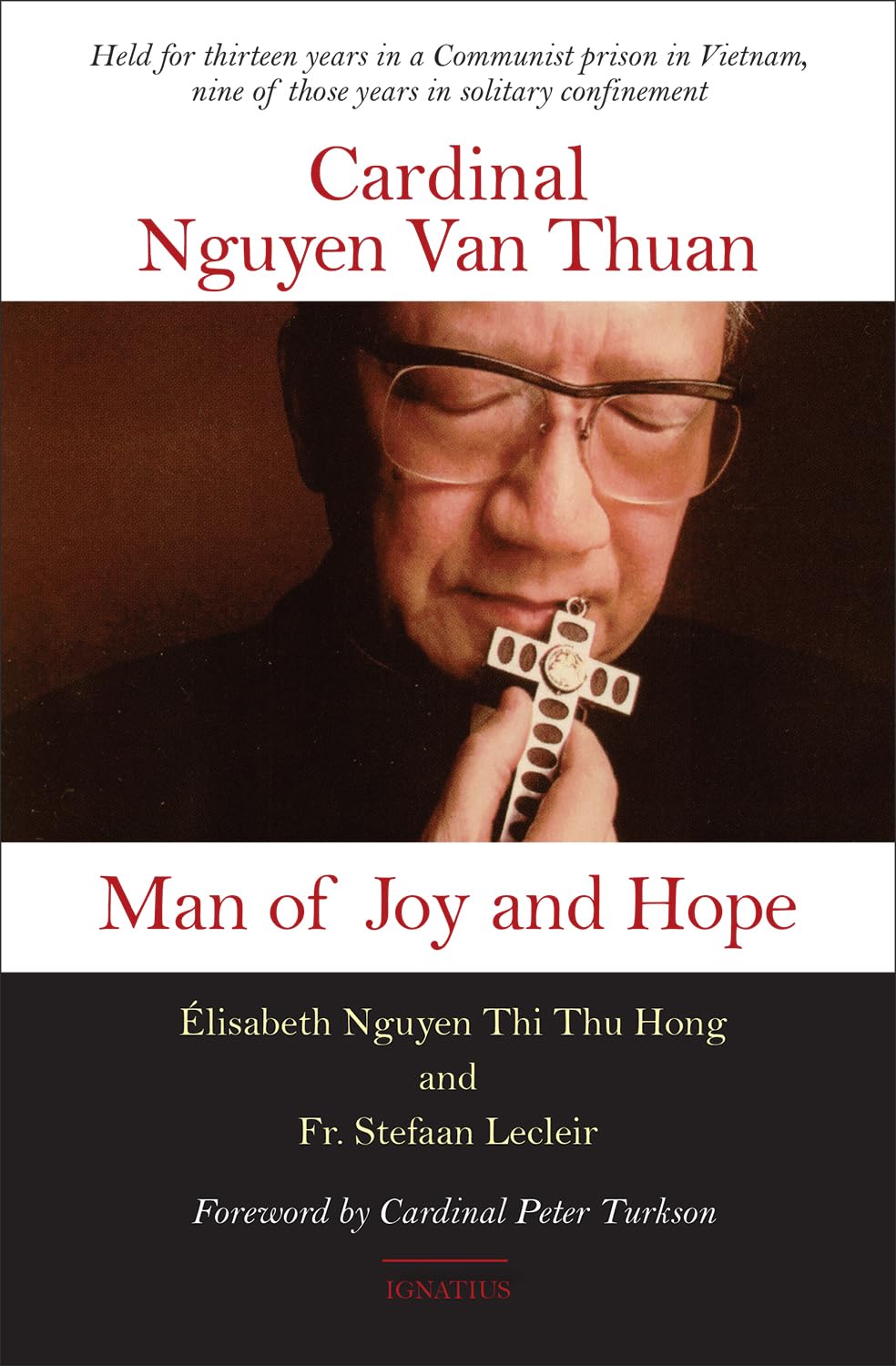 Some physically die for Christ. Others spend their lives dying daily for Him. Such was the case of the late Venerable Cardinal Van Thuan. In Cardinal Nguyen Van Thuan: Man of Joy and Hope, the Cardinal’s sister recounts her brother’s labors in the Lord’s vineyard, thirteen of his seventy-four years having been spent in solitary confinement as the prisoner of a Communist regime.
As a young child, Thuan was captivated by God’s gaze. He often said, “I want to stay under God’s gaze all the time, but I don’t know what his gaze is. I would like to see Him, but I don’t know how” (24). Nguyen and Lecleir recount how this desire shaped Thuan’s life, as he acquired wisdom beyond his years.
In his youth, Thuan taught his sister to see God in creation, and patiently answered her theological questions. Later as a young seminary professor and rector, he guided young souls in discovering their vocation while equipping them with practical knowledge: he taught scouting, first aid, mountain climbing, and above all, how to love. He taught to do good each day, “to love God, to be faithful servants of our country, and to love our neighbors” (48). Reflecting upon those years as an aged cardinal, the saint mused that God fulfilled his childhood prayer: “I was crazy enough to want to see the Lord, but in prison I saw Him in my enemy” (24).
But it took time and grace. As a young priest, he struggled with his uncles’ murders by the Communists, experiencing both insomnia and an “overwhelming anger” (50). As an imprisoned bishop subject to torturous and humiliating conditions, he once again combatted hatred. This climaxed at Phu-Khanh. For months he lived in a cell so damp it grew mushrooms. The food given him was intentionally over-salted, he was denied access to a bathroom, and constantly degraded by the prison’s cleaning woman. Feeling abandoned by God, he became sorely tempted to hatred. Many times, he like Adam, no longer wished to remain under God’s gaze. He wanted to flee. In the crux of these struggles one evening, he fell to his knees, begging God for strength. And then the light flickered in the darkness. The cardinal wrote: “I have always wanted to see God, but it is not possible. It is only in my enemy, who becomes a friend, that I must see Him” (95).
For Thuan, a true shepherd, his walls of confinement became his cathedral. His pastoral work looked different, reminiscent of St. Paul’s in prison. Initially confined within his diocese, Thuan, like the Apostle to the Gentiles, wrote messages of hope to his flock which were secretly dispersed. And when transferred via boat with fellow prisoners to Marseilles, the archbishop became a beacon of hope and pastoral care. He offered advice for seasickness, comforted a suicidal man, preached on the Passion, and heard confessions. Later, as a prisoner in the Giang Xia Parish, the saintly bishop’s mildness towards his guard earned him more freedom. The bishop clandestinely ordained priests and made nightly sacramental calls. Thuan even helped his guard by writing up his prison reports for the Communists!
While some may emerge from confinement bitter or angry, Thuan’s experience profoundly changed him. His sister writes: “He was completely changed by his prison experience. To me, he was no longer just a brother or a bishop, but a man profoundly touched by God” (24). Thuan summarizes his interior disposition in a letter he wrote to his parents: “Dear Mum and Dad, do not burden yourself with grief. I live in each day in union with the universal Church and the Sacrifice of Christ. Pray that I have the courage and strength to always stay faithful to the Church and to the gospel and that I may live in conformity with the will of God” (129).
For the interested reader, the authors divide the book into three sections. The first part dives into the cardinal’s life and message, with each chapter highlighting a specific virtue: Faith during his early priesthood; Hope as a bishop under communist rule; Charity in fulfilling commitments; Prudence in interacting with the communists and during his imprisonment; Courage in recounting his solitary confinement; Magnanimity as a retreat master and speaker; Purity in his final life stage. The second section provides a rich biographical glimpse into his family, while the third part contains historical context about Vietnam.
Anyone privileged enough to encounter Cardinal Van Thuan in this book will find his faith inspiring. Thuan’s life witnesses to the truth that God fills the darkest moments with His light, as they are all surveyed under His compassionate gaze. As such, Thuan’s story is especially beneficial for those grappling with injustice or anyone seeking meaning in suffering.
Maria Cintorino writes from Virginia. Her work has appeared in a variety of publications, including National Catholic Register, Our Sunday Visitor, Faith, and Dappled Things.
Cathedral Basilica of Saint Louis – Trent Beattie
Guenther, John. Cathedral Basilica of Saint Louis: An Illustrated Timeline. St. Louis, MO: Reedy Press, 2025. 176 pages.
Reviewed by Trent Beattie.
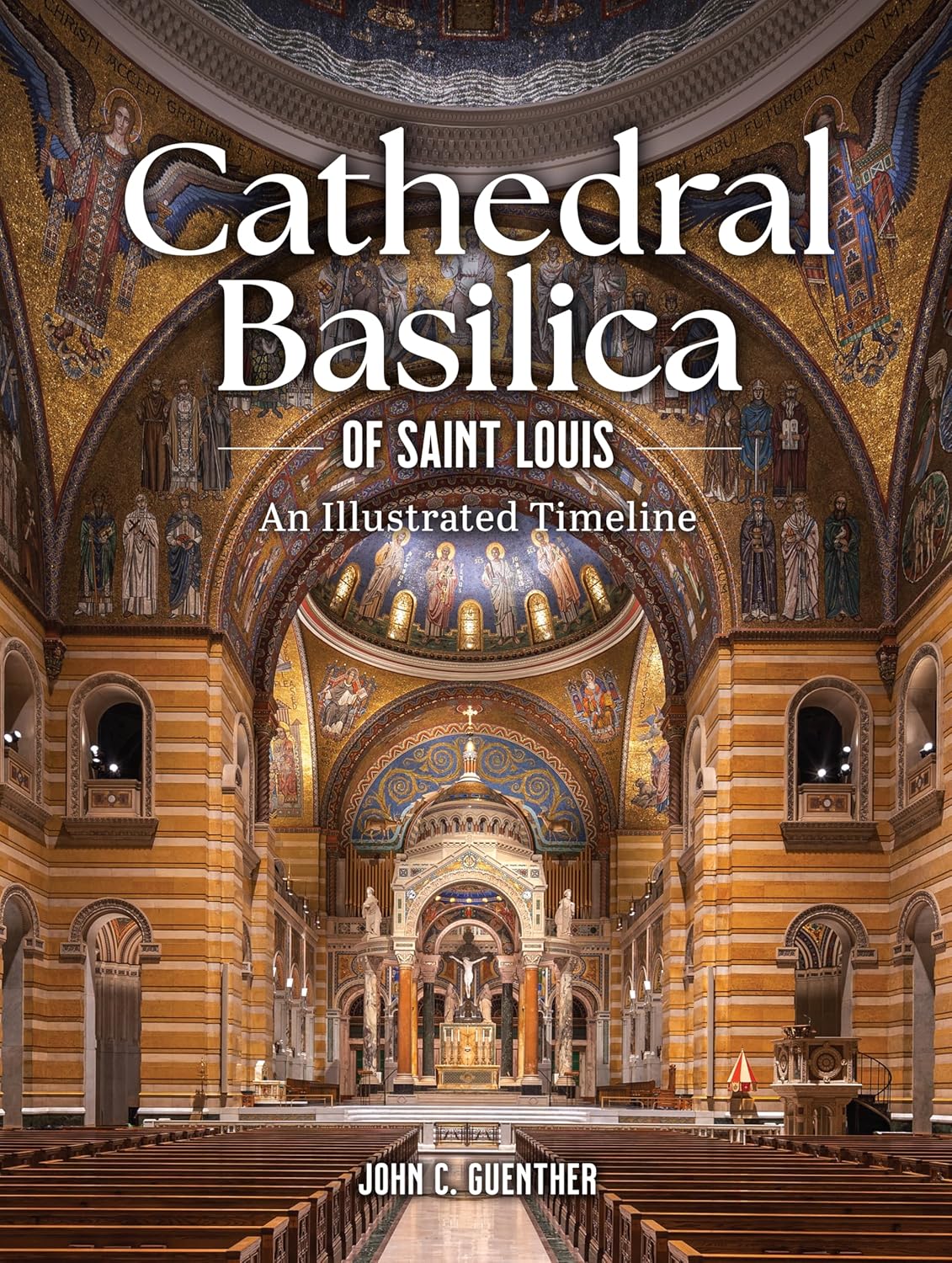 When asked which church houses the largest collection of mosaics in the West, most people would venture an Italian guess, such as the Basilica of Saint Mary Major in Rome or that of Saint Mark in Venice. Surprisingly, a church in the heartland of the United States holds that honor. The Cathedral-Basilica of Saint Louis has over 41,000,000 tiles that cover more than 83,000 square feet of wall and ceiling space.
Like the Missouri city it was built in, the cathedral basilica was named after Saint Louis, King of France (1214–1270). Known for his patronage of the arts — most especially the radiant Sainte Chapelle in Paris — Saint Louis’ catechesis-in-color continues in a multiplicity of mosaics in Missouri.
Scenes from the king’s own illustrious life greet visitors in the narthex (or main entry). In the nave, key missionaries to North America (including France’s Saint Isaac Jogues and Saint Rose Philippine Duchesne) are depicted, reminding viewers of the great gift of faith that was carried over from the “Eldest Daughter of the Church.”
Although not the eldest architect around, the semi-retired John Guenther was a good choice to write about possibly the most remarkable building in the region. He is a former lecturer at Washington University in Saint Louis, and currently serves as president of the city’s chapter of the Society of Architectural Historians. He beautifully showcases the planning, construction and upkeep of the Cathedral Basilica of Saint Louis.
The city’s Archbishop John Glennon wanted to carry out what his predecessors were not able to: the construction of a grand cathedral. After encouragement from Saint Paul’s Archbishop John Ireland — who was about to begin an impressive project of his own — Archbishop Glennon toured European cathedrals in 1905. He then decided that elements of Byzantine, Romanesque and Renaissance styles should be blended into the primary church of Saint Louis. Nearly twenty pages of instructions were made for architects interested in creating a cathedral conformable to his criteria.
The winning team was from the local Barnett, Haynes and Barnett. The bookends of that firm’s name are familiar to anyone acquainted with the history of building in the area. George Ingham Barnett was known as the “Dean of Saint Louis Architecture” because of his vast contribution to the built environment there and beyond. Although deceased by the time of the winning cathedral-basilica design, his sons, George Dennis Barnett and Thomas Barnett, were essential to the project. The former is credited by Guenther as the chief architect, while the latter is given that distinction by the not-always-reliable Wikipedia.
Very reliable, however, is that thousands of souls visit the cathedral-basilica every year. Its sheer size (365-feet long and 204-feet wide, with a dome reaching 227 feet), traditional design and interior artistry draw those in search of sacred beauty. This gloriously shines forth throughout the building, which includes a choir loft far more dazzling than most sanctuaries built in the twentieth century.
The cathedral-basilica’s own sanctuary includes a shimmering gold-tile-topped baldachin (or pillar-supported dome well beneath the domed ceiling) over the altar, indicating the Presence of the King of Kings. Royal names aside, the cathedral-basilica, like any Catholic church, draws all its power from the continuing work of Christ Triumphant — the subject of a mosaic-covered arch in the cathedral-basilica.
Unlike the construction of the massive building itself, which was relatively quick (1907–1914) the interior artistry took several decades to complete. The designs of world-renowned mosaicists Jan Henryk de Rosen and Hildreth Meière are featured via the craftsmanship of Saint Louis-based Ravenna Mosaics, founded by Emil Frei, Sr., who had previously started the company that to this day bears his name: Emil Frei and Associates. Unlike the aesthetic voids of some churches that prompt questions such as “Why is that niche empty?” the entire interior of the cathedral-basilica is teeming with meaning.
The meaning of turning altars towards the congregation can be discussed, but the origin of the practice must be clarified. Despite claims to the contrary in Guenther’s book, this was not done because of the Second Vatican Council. As Pope Benedict XVI stated in the foreword to the 2009 edition of Turning Towards the Lord:
To the ordinary churchgoer, the two most obvious effects of the liturgical reform of the Second Vatican Council seem to be the disappearance of Latin and the turning of the altars towards the people. Those who read the relevant texts will be astonished to learn that neither is in fact found in the decrees of the council.
Those who read Cathedral Basilica of Saint Louis: An Illustrated Timeline will, however, be inspired by the vision of Archbishop Glennon and so many others who collaborated on the grand project that makes every list of sites to see in Saint Louis. Like the illuminated design of Sainte Chapelle, the Cathedral-Basilica of Saint Louis is anything but run-of-the-mill. It is an accomplissement magnifique fittingly named after a French sacred art patron who traveled to distant lands for the restoration and continuation of the Christendom.
If travel to North America had been an option in King Louis XIV’s day, he probably would have spared no expense to get here himself. Thankfully, today’s readers need not spare too much for a glimpse at a building named after a great French king.
Trent Beattie is the author of Scruples and Sainthood (Loreto Publications) and Fit for Heaven (Dynamic Catholic), as well as the editor of Apostolic Athletes (Marian Press), Saint Alphonsus Liguori for Every Day (Mediatrix Press) and Finding True Happiness (Dynamic Catholic), the last of which contains meditations from Fulton Sheen, soon to be formally beatified (or declared “Blessed”) at the Cathedral-Basilica of Saint Louis on the King of France’s Feast Day, August 25.
- Robert Sokolowski, “The Art and Science of Medicine,” in Christian Faith and Human Understanding: Studies on the Eucharist, Trinity, and the Human Person (Washington, DC: The Catholic University of America Press, 2006), 237–249. ↩
 About Book Reviews
Recent Comments