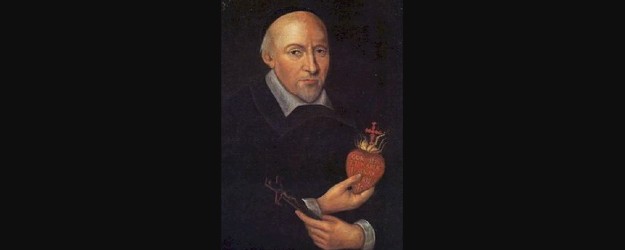
Clergy today could use a boost. Ministerial demands, coupled with decreasing numbers, can be crippling. Diocesan demographic predictions and parish planning strategies show little relief in sight.
It may sound like a diversion (or a delusion!), but perhaps becoming more “romantic” will help!
That is not to suggest that “father” be flirtatious, but that we look to the connection between Romanticism and priestly ministry. This odd-sounding suggestion derives from a recent analysis of Pope Francis’s legacy.1
The title of the article — “Francis, the Romantic Pope” — is purposefully eye-catching. The analysis proves interesting and insightful, especially as it identifies a central emphasis of Francis’s papacy:
For Francis, the heart was the true stake of his papacy — not the heart understood as easy sentimentalism or the glorification of emotion, but as the vital center, the meeting point of thought, will, and feeling. The heart as the place of truth — lived truth, embodied and often contradictory.
Francis was, in this sense, a romantic pope — standing against an Enlightenment model of fides that pairs exclusively with ratio. . . . Francis’s romanticism was not a mood; it was a method. And it extended to gestures potent in their ability to speak directly to the heart.
The author’s distinction between mood and method offers an insight for priestly ministry. As for the former pope, so it can be true for priests today. The method of our ministry becomes “romantic” when we undertake it from and with the Sacred Heart of Jesus.
This thesis harkens back to the origins of the current devotion, in the life and work of St. Margaret Mary Alacoque, VHM (1647–1690). Having experienced three great apparitions of the Sacred Heart of Jesus in the Visitation monastery at Paray-le-Monial (France), she would, with the aid of the Jesuits (especially St. Claude de la Colombiére), initiate public devotion to the Sacred Heart that eventually spread to the entire world.
Designated by Jesus as the “apostle to the Sacred Heart,” St. Margaret Mary came to succeed in her mission, in no small part, because of the power of images. The still-popular devotion operates by way of a “visualist paradigm” through which, as David Morgan explains,2 a sacred image is not merely looked at but is something really to be seen. That is, when we “see” images of the Sacred Heart with our uniquely human power of perception, we do not simply gaze at it; we are acted upon by it. In effect, the image looks back at us, does something to us, and challenges us to be something more. Through the image, we are invited to become what we perceive, to participate in what is depicted there, even to emulate what the image represents.
The Sacred Heart of Jesus exhibits this unique power in itself (revealing Jesus’s passion for all humanity) and through our spiritual attentiveness to it. As such, we might also speak of the heart in terms of a “ministerial paradigm” for priests. We can see this in five realms of ministry, five areas of our life and work in which “romanticism” can be not just a mood but a method for priestly ministry in today’s church.
Praying FROM the heart
The first realm of the ministerial paradigm is decidedly personal. That is, it centers on the person of the priest and his own spiritual life.
St. Margaret Mary developed her devotion to the Sacred Heart through the school of spirituality at work in the monastery of the Visitation of Holy Mary in which she lived.3 St. Francis de Sales, who co-founded that religious Order with St. Jane de Chantal, fervently taught that the heart is the key to all prayer.
For him, meditation (or mental prayer) is meant, primarily, to cultivate the affections of our heart: Through consideration of the passion by which Jesus poured out His heart on the Cross for the salvation of the world, meditative prayer invites us to appreciate how astonishingly we are loved by God, despite our unworthiness. Moved by that love of the Sacred Heart, we are then motivated to return the divine benevolence by our own good deeds.
Beyond the time we give to our hearts in mental prayer, de Sales also counsels the frequent use of aspirations, not only as another means of praying but as an essential exercise for living a holy life. Precisely because of the multiple demands of our ministries, we can and should, throughout the day, raise our minds and stir our hearts toward the One who has so loved the world, and each of us. As the Doctor of the Church writes in his classic Introduction to the Devout Life (part II, chapter 13):
If our mind thus habituates itself to intimacy, privacy, and familiarity with God, it will be completely perfumed by his perfections. There is no difficulty in this exercise, as it may be interspersed among all our tasks and duties without any inconvenience, since in this spiritual retirement or amid these interior aspirations we only relax quickly and briefly. This does not hinder but rather assists us greatly in what we do.4
From this spiritual foundation, the ministerial paradigm informs a second realm, really the whole of a priest’s pastoral work.
Thinking WITH the heart
How ought we, as priests, approach our pastoral ministry, in whatever particular form that takes? In a word, we are called to do what the heart does — Love.
Pope Leo XIV emphasizes this in his first apostolic exhortation, Dilexi Te,5 which can be read as a companion piece to Dilexit Nos, Pope Francis’s encyclical on the Sacred Heart.6 In the conclusion to his document, Leo writes, “A Church that sets no limits to love, that knows no enemies to fight but only men and women to love, is the Church that the world needs today” (n. 120).
Yes, our ministry is work, comprising multiple and exhausting tasks. Our ministry is likewise a challenge, especially in an increasingly secular world and amid a shortage of clergy. But our ministry can also be a blessing — if and when we approach it not as a something to be done but as a someone to love.
In his exhortation, Pope Leo states that the poor are not just people to be helped by our work; they are “one of us” (n. 104). Seen that way, he writes, our pastoral charity has the power to change reality (n. 91): theirs, through the help our ministry provides, and ours, too, in being evangelized by them and their faithfulness (n. 102).
We can make that charitable exchange happen when we approach whatever we do from the perspective of the heart of Jesus. This can be particularly helpful in light of the fact that what we do as pastoral ministers takes place nowadays in the midst of so much brokenness — not only in our being taxed by having multiple responsibilities, but also as our people are challenged by the reconfiguration of parishes and dioceses. In today’s precarious ecclesial context, the words of Jesus to St. Margaret Mary continue to ring true and offer us consolation that we can share with our parishioners: “Behold . . . this heart which has so loved [the world] that it has spared nothing, even to exhausting and consuming itself, in order to testify to its love.”7
Emboldened by that love of the Sacred Heart of Jesus, we can undertake our specifically ordained ministry anew, particularly in terms of our sacramental ministry.
Conferring grace IN the heart
As ministers of the sacraments, we know that the power of grace comes from God. But it is communicated by us and through us — not just in the matter and form of the rituals, but by way of the heart that celebrates them.
This is true of every sacrament a priest celebrates. At baptism, we join other joyful hearts to mark the new birth of a child of God (no matter at what age). In the Eucharist, we share the real presence of Jesus as He enters into and brings about a holy communion with His people. When we anoint the sick, we offer a supernatural consolation that unites the hearts of those suffering with those who care for them.
But perhaps nowhere is the power of the heart more immediately evident than in the confessional. There, in the sacrament of reconciliation, our ministry brings human and divine hearts together in the mysterious power of a profound encounter.
Each time, the rite begins in a deliberate way, with the penitent addressing the priest by his familiar title. In the end, the grace of the sacrament is experienced when, through our priestly ministry there, that person encounters the paternal heart of his or her heavenly Father. St. Francis de Sales expresses well this sacramental “romanticism” in the advice he gave to confessors in his diocese of Geneva:
Remember that at the beginning of their confessions the poor penitents call you Father, and that you must indeed have a fatherly heart towards them, receiving them with a great charity, bearing patiently their uncouthness, ignorance, weakness, slowness and other imperfections. Never leave off aiding them and assisting them as long as there is hope of their amendment. . . . Thus, even though the prodigal son returned from among the swine stripped, dirty and stinking, his good father nevertheless embraced him and kissed him lovingly, wept over hm because he was his father, and fathers’ hearts are tender toward their children.8
That individual encounter of the heart can also happen collectively each Sunday — the fourth realm of the ministerial paradigm.
Preaching TO the heart
What we do most frequently as priests, and what we are most known for by people, is celebrate Mass. So many Masses! Each one gives us the opportunity to carry out our ministry of love for God’s people.
We can do that, in a particular way, every time we preach — if and when our homilies speak “heart to heart.” In another letter of advice, St. Francis de Sales clarifies this “romantic” dimension to homiletics:
How then must we speak? . . . In a word, it means to speak with affection and devotion, with simplicity and candor, and with confidence, and to be convinced of the doctrine we teach and of what we persuade. The supreme art is to have no art. Our words must set aflame, not by shouts and unrestrained gestures, but by inward affection. They must issue from our heart rather than from our mouth. We must speak well, but heart speaks to heart, the lips speak only to men’s ears.9
Our heart is where preparing the homily begins. Our heart is where the homily is shaped. Our heart is where the homily speaks from. (In Salesian spirituality, the method of heartfelt homiletics parallels the “praying with the heart” mentioned above as the first ministerial realm.10)
More importantly, the heart is where preaching is aimed. As the Vatican’s Homiletic Directory rightly reminds us, the homily is not meant to be a topical address on issues unrelated to the day’s Lectionary, nor a catechetical instruction detached from the liturgical celebration, nor an occasion for in-depth biblical exegesis or the preacher’s personal witness.11 Rather, its real purpose is to touch the hearts of those who hear the Word through our words in the context of the liturgical celebration. When every homily we preach conveys clearly and passionately the Good News of salvation, people’s hearts will be converted and transformed.
Pope Francis went to great lengths to communicate this “romantic” approach to preaching, speaking of it in an entire chapter of his first apostolic exhortation, Evangelii Gaudium.12 Likening our homiletic ministry to having a mother conversation (nn. 139–141), he offers paternal advice about how to use words which set hearts on fire.
The memory of the faithful, like that of Mary, should overflow with the wondrous things done by God. Their hearts, growing in hope from the joyful and practical exercise of the love which they have received, will sense that each word of Scripture is a gift before it is a demand. (n. 142)
The difference between enlightening people with a synthesis and doing so with detached ideas is like the difference between boredom and heartfelt fervour. The preacher has the wonderful but difficult task of joining loving hearts, the hearts of the Lord and his people. (n. 143)
To speak from the heart means that our hearts must not just be on fire, but also enlightened by the fullness of revelation and by the path travelled by God’s word in the heart of the Church and our faithful people throughout history. (n. 144)
To extend that “heart to heart” conversation beyond the liturgy, the last realm of the ministerial paradigm invites us back to the beginning.
Worship OF the heart
In addition to praying from the heart, pastoring with the heart, conferring grace in the heart, and preaching to the heart, priestly ministry today can be especially fruitful when we cultivate devotion to the Sacred Heart among the people of God.
This universal devotion remains popular in many ways that we can offer in parishes: through regular Holy Hours before the Blessed Sacrament, to “keep watch” with Jesus as he asked of his disciples in the Garden of Gethsemane (Matthew 26:40); through a dedicated Mass on the first Friday of each month; through a novena of liturgical celebrations over the nine days leading up to the solemnity in June; and through the enthronement of the Sacred Heart image in our churches.
Granted, this devotion may not speak to a world where the faith has lost its foothold. Nor does its practice achieve the ultimate goal of living a devout life.
But it does draw priests and faithful alike nearer to Him who is the source and the summit of our ministry. The devotion reminds all believers of the “immeasurably generous” love of God on our behalf (Ephesians 1:3–10), a message that will undoubtedly benefit our priestly life and work.
That work — our primary duty — is to proclaim the Good News of salvation, to proclaim the truth that our best hope in this life lies not in this world but in the steadfast grace and mercy of Jesus. When we communicate that truth — when we invite believers to take heart and not lose heart and behold the Sacred Heart13 — then we act in a distinctly “romantic” and inspiring way that makes our priestly ministry meaningful to ourselves and our people.
- Antonio Spadaro, S.J., “Francis, the Romantic Pope: Making Room for the Reasons of the Heart,” Commonweal (August 26, 2025). Online at www.commonwealmagazine.org/francis-heart-romantic-love-spadaro. ↩
- David Morgan, “The Visual Piety of the Sacred Heart,” Material Reality: The Journal of Objects, Art and Belief (May 9, 2017). DOI: 10.1080/17432200.2017.1302127. ↩
- See my exploration of this in Behold This Heart: St. Francis de Sales and Devotion to the Sacred Heart (Manchester, NH: Sophia Institute, 2021). ↩
- Francis de Sales, Introduction to the Devout Life, translated and edited by John K. Ryan (New York: Image Books, 2003), p. 88. See also my explanation of this spiritual practice in Live Today Well: St. Francis de Sales’s Simple Approach to Holiness (Manchester, NH: Sophia Institute, 2015), pp. 43–45. ↩
- Leo XIV, Dilexi Te, apostolic exhortation on Love for the Poor (October 4, 2025). Online at https://www.vatican.va/content/leo-xiv/en/apost_exhortations/documents/20251004-dilexi-te.html. ↩
- Francis, Dilexit Nos, encyclical letter on the Human and Divine Love of the Heart of Jesus Christ (October 24, 2024). Online at https://www.vatican.va/content/francesco/en/encyclicals/documents/20241024-enciclica-dilexit-nos.html. ↩
- Cited in Behold This Heart, 31–32. ↩
- “Advice to Confessors by St. Francis de Sales,” trans. by Joseph M. Baraniewicz, OSFS (Washington, DC: Institute of Salesian Studies, 1969), p. 4. ↩
- On the Preacher and Preaching: A Letter by Francis de Sales, translated and with an introduction and notes by John K. Ryan (New York: Henry Regnery, 1964), pp. 63–64. ↩
- See Thomas Dailey, “Preaching as Praying: Complementary Methods for Sacred Eloquence,” New Theology Review 31/1 (October 2018): 11–17. ↩
- Congregation for Divine Worship and the Discipline of the Sacraments, Homiletic Directory (June 29, 2014), n. 6. Online at https://www.vatican.va/roman_curia/congregations/ccdds/documents/rc_con_ccdds_doc_20140629_
direttorio-omiletico_en.html. ↩ - Pope Francis, Evangelii Gaudium, apostolic exhortation on the Proclamation of the Gospel in Today’s World (November 24, 2013). Online at https://www.vatican.va/content/francesco/en/apost_exhortations/documents/papa-francesco_esortazione-ap_20131124_evangelii-gaudium.html. ↩
- With this title, Bishop David Bonnar published his third pastoral letter to the Diocese of Youngstown, OH on June 13, 2025. Online at doy.org/pastoral-letter-behold-the-sacred-heart. ↩
 About Fr. Thomas F. Dailey
Recent Comments