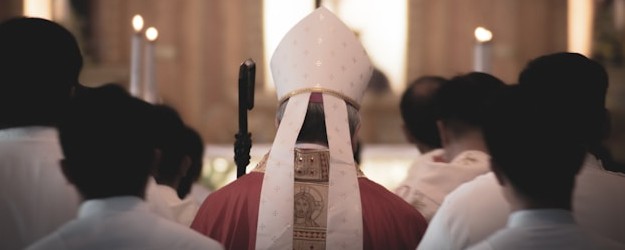
The Second Vatican Council cast a vision of the bishop as father, co-worker, and friend of his priests, a vision which Pope Francis echoed on the 160th anniversary of Saint John Vianney’s death when he addressed the world’s priests with a word of encouragement. And yet, despite the beauty of the Council’s call, a bishop’s relationship to his priests appears less than brotherly, fatherly, and in some cases, fair. The publication of Catholic University’s National Study of Catholic Priests in 2022, revealed that 76% of priests don’t trust the American episcopacy; the causes of which are complex, but one unmistakable and significant influence is the publication of the Dallas Charter (DC) in June of 2002.
No document has had a greater impact on the leadership of the U.S. bishops, and perhaps no other factor has caused such widespread mistrust among the presbyterate. Notwithstanding the good intentions of the DC, such as reestablishing trust with the faithful and broader society, bringing pedophile priests to justice, offering healing to victims of priestly sexual abuse, and implementing procedures to mitigate future abuse, the DC has nonetheless had several unintended consequences. Perhaps most apparent is the lack of due process for priests. Both Cardinal Dulles1 and Father Neuhaus2 identified this deficiency and wrote critically of the DC shortly after its publication. More than twenty years later, Msgr. Guarino3 has reiterated the precarious position of priests, and the dearth of trust they have in their bishops.
There remains, however, an unintended effect even more serious than the lack of justice for priests: the DC tends to eclipse doctrine. The preference of procedure over doctrine sorely afflicts our age, and if the DC has created a lack of due process for priests, it is primarily because the Church has succumbed to worldly thinking about the hierarchy of truths. To be sure, the eclipse is not outright denial, but in reality, the failure to prioritize doctrine over procedure constitutes a failure in the order of love and a breach of trust. When the bishops give preference to procedure over doctrine, they disrupt the hierarchy of truths and consequently fail not only to secure justice for their priests, trust from the faithful, and protection of children, but they impose the immediate over the the world of eternal truths. As C.S. Lewis says: “If Esau really got the pottage in return for his birthright, then Esau was the lucky exception. You can’t get second things by putting them first; you get second things only by putting the first things first.”4
The bishops were reeling from the Boston Globe articles and their aftermath when they met in June of 2002, and in light of the bad press and the political pressure, the bishops hastily drafted and approved the groundbreaking document which was almost universally accepted among the episcopate. The national coverage had the effect of intensifying the response of the bishops such that the DC gave birth to an extraordinarily large apparatus theretofore non-existent: the National Review Board, offices of ministerial accountability, diocesan review boards to examine clerical misconduct, sexual or otherwise, obligatory Virtus training modules for seminarians, priests, and lay employees/volunteers, codes of conduct and regular background checks, not to mention the prohibition of activities such as being alone with a minor.
Despite the breadth and detail of the DC, it was not, however, without precedent. The process of bureaucratization which had begun 40 years earlier was in full effect at the meeting of the bishops in 2002. The trend began in the 1960s when dioceses began to expand the number of offices within the chancellery. The increase of diocesan offices brought an increase of specialists: experts of liturgy, catechesis and pastoral ministry. The purpose of the experts was to propose to the bishop the best way to accomplish said ministry and to obtain his approval. Simultaneous to the increase of offices at the diocesan level, the National Council of Catholic Bishops (USCCB) saw a similar increase of committees, offices and experts in ecclesial and social life.5 The bishop thus became less of an authority on doctrine, morality and spirituality, and more of a functionary in an increasingly large bureaucracy.
There exists no other apparatus of the bishop that makes as many demands or carries such severity of punishment as the DC. For example, does any diocese send a monthly bulletin to its presbyterate to remind them of the gravity of their teaching authority? A priest pledges not to have inappropriate touch with a minor, but does he promise not to have inappropriate touch with himself? Does any diocese require its priests to sign a code of conduct that they will have an hour of adoration and read Sacred Scripture daily? Would the Vicar for Clergy remove a priest if there was a credible allegation that for five years he had neglected to take an annual retreat? Would failure to pray the Divine Office, to celebrate the Mass or fast cause scandal among the faithful? Or would the use of pornography, the abuse of the liturgy, or doctrinal obfuscation escalate to the office of the bishop?
This is not to suggest that bishops should extend the scope of their oversight and increase policies, nor to suggest that there should not be any protocol concerning a priest’s conduct with children; but rather to suggest that the bishops have effectively created, maintained, and elevated a bureaucracy which enjoys greater attention than Divine Revelation, liturgy, and personal holiness. It would have been one thing if the bishops had adopted a document with the scope and power of the DC as one element of a larger, stronger effort to renew the priesthood. However, one struggles to see a comparable effort to renew the doctrinal, liturgical, and spiritual lives of priests. The problem is not that the bishops implemented prudential procedures surrounding a priest’s conduct with the youth; the problem is that the procedures enjoy greater attention than doctrine.
It is a general rule that bureaucracies tend to resist spiritual life, and will eventually kill it if left unchecked. The appeal of efficiency, control, and immediate results have always appealed to fallen man — already struggling to see the spiritual world — such that unless he is rooted firmly in the things of God, he will lose sight altogether of how the spiritual world operates and therefore lose his access to it. When the Church fails to put on the mind of Christ, she will keep the spirit of the world and respond to sin and crisis in worldly fashion, i.e., when bureaucracy prevails, the Church responds with procedure. Acquiring the mind of Christ requires serious, sustained effort, and it does not yield immediate results, especially in an apostolic age like our own. The Church doesn’t reject bureaucracy and procedure, but she rightly orders, and at times subjects, bureaucracy to life in Christ.
In addition to the general atrophying of spiritual life, there are two doctrines which have suffered the triumph of the DC: the authority of the bishop, and the Church as the locale of weeds and the wheat.
The DC has compromised the bishop’s capacity to exercise his rightful authority in his own diocese. The acceptance of the DC in 2002, and the reticence to amend it 25 years later, is not without reason: bad press and serious financial loss are a real threat — a reality in many dioceses — when a bishop even appears to have mishandled the procedures of the DC. Between a critical secular press and survivor networks, most bishops feel significant pressure and are eager to avoid the trouble. Fair enough. Notwithstanding the wisdom of avoiding unnecessary conflict, it must be admitted that there is a certain convenience to upholding the status quo: the DC frees bishops from making personal judgments as the spiritual authority of their diocese.
Any good leader in reality must follow certain procedures because they exist to ensure consistency of operation, efficiency and justice. A bishop is not an absolute ruler in his diocese and he is obliged to follow procedures, such as Canon Law, civil law and in some cases, diocesan law. Furthermore, he has an obligation to take counsel, Proverbs 11:14 says, “Where there is no counsel, the people fall; but in the multitude of counselors there is safety.” Counsel is an integral and necessary element of a bishop’s leadership of his diocese, especially considering the breadth of his responsibilities and his own personal shortcomings to meet the task adequately.
“Good management practice,” says Hitchcock, “seeks to avoid situations where it is necessary to make fundamental judgments about the rightness or wrongness of a particular course of action and prefers, if possible, to rely on sophisticated manipulation of people’s psyches as of overcoming dissension.”6 50 years ago it was by the counsel of experts that some bishops failed to remove derelict priests from ministry, and now it is the counsel of experts which removes them, and so long as the bishop follows the counsel of experts he does not risk making a bad judgment.
As crucial as the counsel of lawyers, psychologists, and law enforcement may be, their counsel cannot supersede the obligation of the bishop; first, to judge his diocese according to the mind of Christ instead of the spirit of the world; second, to foster a robust moral and spiritual life among his priests; and third, to handle an accusation against one of his priests by virtue of the obligation he has to the priest.
God gave divine authority to the Apostles, who then gave it to the bishops, who exercise authority over their priests. In this light it would be fair to ask whether the bishops have abdicated their divine authority rightfully to govern their dioceses in favor of maintaining collegiality with the USCCB, following procedure, and validating the expertise of specialists? It is unenviable, but governance is the bishop’s responsibility, as the American rabbi and psychologist Edwin Friedman says, “Leadership . . . is not easy; learning techniques and imbibing data are far easier. Nor is striving or achieving success as a leader without pain: there is the pain of isolation, the pain of loneliness, the pain of personal attacks, the pain of losing friends.”
The primacy of doctrine over procedure ensures that the procedures themselves remain at the service of the human person. Man is complicated, and no amount of procedure can account for the complexity of sin, grace and freedom. Nor can procedure replace the leadership of a confident, wise, and holy bishop who both sees the complexity of the human person and judges according to the hierarchy of truths. The authority of bishops does not guarantee that every decision they make will be perfect, or even wise — even good and prudent bishops have made bad decisions, but it is inappropriate to hand over difficult cases to a committee, both because it risks injustice and more importantly, because it obfuscates the sacramental character of bishops as custodians of their local church.
The second doctrine to suffer the ascendency of the DC is the Church as the locale of the weeds and the wheat (cf. Matthew 13: 24–30), or the temptation of perfectionism. Promises of creating a perfect world, society, or human being are so prominent within the minds of political, medical, economic and ecclesial institutions that no leader today is immune to their allure. The error of perfectionism is to think that if the leader applies the right technique, he can achieve perfection of the institution imminently. In a world which no longer believes in the Fall as fundamental to the human condition, a leader can mistakenly think that the impurities of his institution have a human remedy. Hence, in a technical and bureaucratic age like our own, procedure and discipline for lack of compliance are effective ways of removing impurities. Although the temptation of perfectionism is perennial, the particulars vary from age to age; the error of the DC is that procedure will perfect the Church, specifically the presbyterate, of all impurities.
The DC’s universal acceptance among the American bishops failed to account for the particular circumstances in each diocese and the complicated situations which face a bishop. The DC removes prudential decisions, i.e., the risk of making a mistake, from the the bishop and puts them into procedure. Eliminating contingencies means greater control and therefore perfection. Effectively the DC determines whether a priest is suitable for priestly ministry by making him to adhere to a set of procedures, the violation of which, as mentioned above, could result in his suspension or removal from active ministry.
According to the Lord’s parable, the servants of the householder are not wrong for wanting to remove the weeds from the field, for the good of the crop. Yet the householder has another plan for the field and only at the end of the season will he separate the weeds from the wheat. The Church will be full of good and wicked until the Second Coming, and if the Lord Himself allows for weeds to grow among the wheat, it means that all disciples must accept that the Church herself will always be filled with sinners and that she will not achieve perfection until until His final coming. A quick fix mentality cannot solve the complexity of the Church’s ailments, and in fact her imperfection can be a means of allowing God to act for her good; for we know that all things work together for good to them that love God (cf. Romans 8). Although a bishop cannot take a passive attitude to the sins and weakness of his priests, nor can he adopt the view that their perfection will come by means of stronger procedure; the bishop can only do so much.
In addition to the obedience and promise of respect that priests make to their bishop, most priests generally want to have a relationship with their ordinary, and according the aforementioned study from Catholic University, most bishops tend to see themselves as fathers and brothers to their priests. Priests wish to know the bishop and be known by him in a personal way. The widespread distrust of the bishops among priests is not a matter of priests refusing to trust, but the impression that in a difficult situation the bishop will tend to look at them, his priests, as liabilities, and therefore tend to keep his distance. It is naïve and unfair to lay the blame on the bishops exclusively, but nor is it foolish to imagine that if the bishops were to place greater emphasis on the clarity of doctrine, the integrity of the liturgy, and personal holiness it would be significant encouragement for their priests.
Notwithstanding the good that the DC has achieved, it is fair to ask whether the good outweighs the bad and whether the good that the DC sought to implement would have better had the DC not assumed a disproportionate place in the leadership of the American bishops. As the Church in America approaches the 25th anniversary of the DC, our bishops, very few of which had anything to do with the drafting and ratifying of the DC, have the opportunity to prioritize the eternal over the immediate and to amend the DC’s excesses, a decision which would likely secure the protection of children, the trust of their priests, and, most importantly, lead the Church to seek first the Kingdom and its righteousness.
- Avery Dulles, “Rights of accused priests: Toward a revision of the Dallas charter and the essential norms,” America Magazine, June 21, 2004. www.americamagazine.org/faith/2004/06/21/rights-accused-priests/. ↩
- Richard John Neuhaus, “Seeking a Better Way,” First Things, October 1, 2002. firstthings.com/seeking-a-better-way/. ↩
- Thomas G. Guarino, “The Two Sides of the Dallas Charter,” First Things, March 18, 2025. firstthings.com/cardinal-wilton-gregory-and-the-two-sides-of-the-dallas-charter/. ↩
- C.S. Lewis, “First and Second Things,” God in the Dock (Grand Rapids, MI: William B. Eerdmans Publishing Co., 1970), pp. 278–280. ↩
- As of 2026 the USCCB is composed of 7 Offices, 18 Committees, and 7 Sub-Committees. ↩
- James Hitchcock, Catholicism and Modernity (New York: Seabury Press, 1979), 106. ↩
 About Fr. Andrew Brinkman
“Would failure to pray the Divine Office, to celebrate the Mass or fast cause scandal among the faithful? Or would the use of pornography, the abuse of the liturgy, or doctrinal obfuscation escalate to the office of the bishop?”
This perhaps reveals a greater need within the Church to provide avenues for lay accountability at the local level. I have personally felt compelled to contact diocesan authorities on several occasions of substantial and blatant liturgical abuse (such as consecrating wine in large glass tankards instead of the chalices). In every case I have found it cumbersome and time-consuming to even begin to find the proper authorities, and all the while have found myself generally looked at with suspicion for making these reports.
Rather than diminishing the accountability called for by the DC, it is necessary to expand and equalize accountability. It must be over more than just sexual misconduct. The whole church is responsible in their own way for the whole church.