The proclamation of St. John Henry Cardinal Newman as Doctor of the Church is a great “coda” on several of the key themes and ideas of modern Catholic intellectual and pastoral life: integration of ideas, centrality of theology in the “idea” of the university, importance of conscience and heart, careful reasoning with a voracious appeal to all of Western history, personal encounter with others in the educational process. And perhaps the biggest one of them all: the development of doctrine.
The development of doctrine is one of those phrases that allows old and new, tradition and progress, conservative and liberal to find common ground, organically, harmoniously, and methodically integrated. Christopher Mooney reminds us, though, that doctrinal development, as articulated by Newman, has not always been a norm in Catholic thought.
Newman’s theory of doctrinal development, classically articulated in his 1845 Essay on the Development of Christian Doctrine, initially met with skepticism . . . Especially after the beginning of the Modernist controversy in the later 19th and early 20th centuries, Newman’s ideas were not widely embraced because it was difficult to distinguish his theory of development from a theory of doctrinal evolution or continuous revelation, wherein God uses the church as an instrument to reveal new ideas.1
That being said, the Second Vatican Council in the 1960s “changed the game” a bit. Mooney explains that “Newman’s thinking on development proved highly influential at the Second Vatican Council, which nonetheless emphatically rejected any form of progressive or continuous revelation.”2
However, even if doctrinal development was a concept guiding the thought of the Council Fathers, we might ask whether the Council proposed any specific doctrinal development.
On the one hand, it may seem that, even though discussed, development was not, in fact, instantiated in the Council whose purpose, according to Pope John XXIII, had been pastoral rather than doctrinal. He said definitively:
The salient point of this Council is not, therefore, a discussion of one article or another of the fundamental doctrine of the Church which has repeatedly been taught by the Fathers and by ancient and modern theologians, and which is presumed to be well known and familiar to all. For this a Council was not necessary. . . . The substance of the ancient doctrine of the deposit of faith is one thing, and the way in which it is presented is another. And it is the latter that must be taken into great consideration with patience if necessary, everything being measured in the forms and proportions of a magisterium which is predominantly pastoral in character.3
In other words, whereas doctrine and its development might seem to be important themes, the Council wasn’t there to invoke them. And that turned out to be true more or less in fifteen of its sixteen documents.4
Nevertheless, there was one text from the Council that stood out in the light of these reflections. As 1965 closed, and the ecumenical gathering neared its end, at last the Council Fathers — having gone through many drafts — approved Dignitatis Humanae, its Declaration on Religious Freedom. The document unambiguously announced that “the council intends to develop the doctrine of recent popes on the inviolable rights of the human person and the constitutional order of society.”5
What did the document mean? What “doctrine” was being developed? The Second Vatican Council was not fueled by, say, an Arian controversy needing a statement about consubstantiality, nor was it a bold statement of the definitive belief in the Immaculate Conception eighteen centuries after Our Lady walked the earth. It seemed, rather, to have something to do with human rights and constitutional law. In particular, it aimed to secure religious freedom by proclaiming that “the right to religious freedom has its foundation in the very dignity of the human person as this dignity is known through the revealed word of God and by reason itself.”6 In other words, the development of doctrine had to do with anthropology rather than theology; this was a development of the doctrine of the dignity of the human person.
And yet, even now, perhaps, the most significant hermeneutic problem of the Second Vatican Council is the interpretation of Dignitatis Humanae. According to Nick Healy, the Declaration on Religious Freedom “was the most controversial text of Vatican II”;7 at the same time, it “has become a cornerstone of the social doctrine of the Church.” It is, furthermore, in the words of Cardinal Dulles, “the only document of Vatican II that explicitly claims to be a development of doctrine,”8 but (again Healy) “the question of how to understand the nature of this development and thus the teaching of Dignitatis Humanae in the context of the Catholic tradition as a whole remains an open question.”9 And since, according to St John XXIII, the Council was pastoral in character, those concerned with pastoral action should take this question seriously.
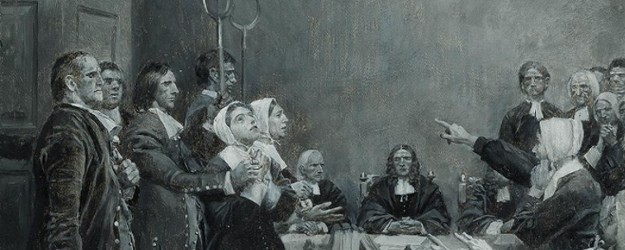
I argue that to bring out the full nuance of the contemporary development of the Church’s teaching on human dignity, the mimetic theory discovered by René Girard (and now more-or-less confirmed by the Magisterium) assists in solving the problem suggested by the text and its reception by the post-conciliar popes.10 Furthermore, understanding the impact of the “scapegoat mechanism” at the heart of fallen human culture along with Christianity’s role in demythologizing its deceptions helps us see how modern society “stands by” the person against the crowd in a new light of dignity.11 The pre-Girardian position12 cannot articulate a development in dignity in this way since it has no access to the various “pedagogical” episodes of scapegoating in Western history (Inquisition executions, witch burning,13 religious wars, etc.) and, thus, only a modern anthropology borne of this new knowledge (but not opposed to the best of traditional Christianity) can explain the development. But when we see the development in light of the new historical knowledge gained by Holy Mother Church and sifted through her perennial teachings, we glean very important pastoral fruit for our time.
In order to illustrate why this is the case in this essay, I will limit my discussion to only a few salient passages in the text and their influence on the post-conciliar popes. And for that matter, I will set aside conversations about philosophical anthropology or political jurisprudence although these vantage points are important. Instead, it is the historical dimension of the text that is best able to shed light on the development of doctrine and assist our ability to handle its pastoral implications for our time. This discussion will fuel a few short pastoral reflections at the close of the article.
The Declaration
The text is aware of a historical newness to the “modern” world and a deepening awareness of a Gospel leaven from the Church. Thus, the declaration claims that
A sense of the dignity of the human person has been impressing itself more and more deeply on the consciousness of contemporary man, and the demand is increasingly made that men should act on their own judgment, enjoying and making use of a responsible freedom, not driven by coercion but motivated by a sense of duty. The demand is likewise made that constitutional limits should be set to the powers of government, in order that there may be no encroachment on the rightful freedom of the person and of associations.
At the same time, in reflecting on the historical influence of the Gospel, the text proclaims that
In faithfulness therefore to the truth of the Gospel, the Church is following the way of Christ and the apostles when she recognizes and gives support to the principle of religious freedom as befitting the dignity of man and as being in accord with divine revelation. Throughout the ages the Church has kept safe and handed on the doctrine received from the Master and from the apostles. In the life of the People of God, as it has made its pilgrim way through the vicissitudes of human history, there has at times appeared a way of acting that was hardly in accord with the spirit of the Gospel or even opposed to it. Nevertheless, the doctrine of the Church that no one is to be coerced into faith has always stood firm.
Thus the leaven of the Gospel has long been about its quiet work in the minds of men, and to it is due in great measure the fact that in the course of time men have come more widely to recognize their dignity as persons, and the conviction has grown stronger that the person in society is to be kept free from all manner of coercion in matters religious.
The modern Church is claiming that a new consciousness has dawned upon her, and this new awareness is linked to what she has learned from history and its ups and downs (its ways of acting for or against the promptings of the Holy Spirit). But what are these “vicissitudes” experienced by the People of God in history? The text does not say. What aspects of human history are challenging modern people to uphold the rights of the individual against encroaching social groups or governments? The text does not say.
The Magisterial Reception
Arguably, it is John Paul II who sheds light on the point about the People of God in TMI 35:
Another painful chapter of history to which the sons and daughters of the Church must return with a spirit of repentance is that of the acquiescence given, especially in certain centuries, to intolerance and even the use of violence in the service of truth.
It is true that an accurate historical judgment cannot prescind from careful study of the cultural conditioning of the times, as a result of which many people may have held in good faith that an authentic witness to the truth could include suppressing the opinions of others or at least paying no attention to them. Many factors frequently converged to create assumptions which justified intolerance and fostered an emotional climate from which only great spirits, truly free and filled with God, were in some way able to break free. Yet the consideration of mitigating factors does not exonerate the Church from the obligation to express profound regret for the weaknesses of so many of her sons and daughters who sullied her face, preventing her from fully mirroring the image of her crucified Lord, the supreme witness of patient love and of humble meekness. From these painful moments of the past a lesson can be drawn for the future, leading all Christians to adhere fully to the sublime principle stated by the Council: “The truth cannot impose itself except by virtue of its own truth, as it wins over the mind with both gentleness and power.”
The quote to conclude the passage is directly from Dignitatis Humanae which suggests that the historical reflection is adding to the Magisterial interpretation of the conciliar document.
A number of important phrases in John Paul II’s reflection suggest that the “scapegoat mechanism” is being “un-mythed” in the Church’s reflection. First, we note that the Holy Father describes “cultural conditioning” from which “only great spirits, truly free and filled with God, were in some way able to break free.” This means that the Church’s modern repentance is based on a review of historical episodes in which whole groups, all members of society, or consensus views were in some way completely blinded to the truth and, moreover, unable to “break free” of the collective deceptions. This is exactly the kind of mimetic deception Girard describes as a buildup to scapegoating phenomena.
In Girard’s “mimetic theory,” the principle of mimetic desire and conflict explain the development of crowd phenomena whereby individuals in a group share each other’s desires to violently expel another in the name of a perceived good — a belief that the other person deserves to be eliminated, even killed. When this collective violent misperception reaches a crescendo, the group often finds an “outlet,” “release,” or “catharsis” in and through the collective (or “mimetic”) killing of a “surrogate” victim, one who stands in the place of all outlets of hatred. This is the scapegoat.
In this light, we note that John Paul II recalls that the result is not simply a rejection of the truth; it is in the worst cases, “intolerance and even the use of violence in the service of truth.” The crowd, the group — society in general — violently oppresses the minority voice in the name of truth. The mob believes that its persecution is justified. Again, this is exactly what we mean by scapegoating.
Now, for Girard, the scapegoat mechanism was the singular force that kept many archaic societies alive in the ancient world. Without the cathartic release of the victimization process absorbed in mythological justification, crowds would have destroyed themselves in mimetic violence. This presents a strange two-sided face to archaic violence. On the one hand, this process allowed for society to exist and even develop; on the other hand, it was always fundamentally sealed in a lie perpetrating violence and, we would say now, an attack on the dignity of the human person. For Girard, it is Christ who fully unveils this mytho-poetic force of scapegoating; He alone is the innocent victim who reveals scapegoating at the heart of culture.
It is important to note, then, that the call to repentance from the Magisterium is one that embraces exactly Girard’s understanding of the anthropological force of the Gospel: the witness of the innocent victim. The Church can, thus, “express profound regret for the weaknesses of so many of her sons and daughters who sullied her face, preventing her from fully mirroring the image of her crucified Lord, the supreme witness of patient love and of humble meekness.” Had all members followed the way of the Lord — the way of the crucified victim and scapegoat (Lamb of God) — then no other victims would have been produced. Yet, over time, as history unfolds, the Church learns more and more about the ways in which victimization can hide itself. For example, once we persecuted women in the name of witchcraft; now we shudder at the term “witchhunt.”
The Secular Reception
In fact, this is the same dynamic at work in moving the United Nations declaration of human rights. The text, at a key point in its preamble, articulates the historical framework engendering the need to establish universal rights:
Whereas disregard and contempt for human rights have resulted in barbarous acts which have outraged the conscience of mankind, and the advent of a world in which human beings shall enjoy freedom of speech and belief and freedom from fear and want has been proclaimed as the highest aspiration of the common people, Whereas it is essential, if man is not to be compelled to have recourse, as a last resort, to rebellion against tyranny and oppression, that human rights should be protected by the rule of law . . .14
Undoubtedly, the United Nations emerged in the middle of the twentieth century in direct response to the atrocities of the Second World War, especially in response to Nazism and the persecution of innocents — particularly Jews — who were scapegoats of Hitler’s national socialist racism. The Declaration of Human Rights must be read against the world consciousness borne of a demythologization of this kind of collective persecution.
Thus, the centering historical awareness — both in the Church and in the secular world which she has sanctified over time — is the awareness of collective misperception engendering a false second of justified violence against victims. If there is a most significant positive dimension to the knowledge that the “modern world” has, it is precisely in its “concern for victims” or possible victims.15
The 2014 Prooftext
Although this anthropological approach has not seemed to be the explicit teaching of the Catholic Church, it nevertheless, seems to have had core elements embraced by the Magisterium in 2014. Pope Francis spoke to an international body of jurisprudence with the following words:
In mythology as in primitive societies, the crowd discovers the evil powers of its sacrificial victims, who are accused of the misfortunes that befall the community. This dynamic is not lacking in modern societies either. Reality shows that the existence of the legal and political instruments necessary to address and resolve conflicts is not a sufficient guarantee to prevent some individuals from being blamed for everyone’s problems.
Civic life, structured around an organized community, needs rules of coexistence, the wilful violation of which demands appropriate redress. However, we are living in times in which, as much as in some political sectors as by certain media, public and private violence and revenge are incited, not only against those responsible for committing crimes, but also against those suspected, whether proven or not, of breaking the law.
In this context, a widespread conviction has taken root in recent decades that public punishment can resolve the most disparate social problems, as if completely different diseases could be treated with the same medicine. This is not so much about trust in some social function traditionally attributed to public punishment, as about the belief that it is possible that such punishment can obtain those benefits that would demand the application of a different type of social and economic policy as well as social inclusion.
Scapegoats are not only sought to pay, with their freedom and with their life, for all social ills such as was typical in primitive societies, but over and beyond this, there is at times a tendency to deliberately fabricate enemies: stereotyped figures who represent all the characteristics that society perceives or interprets as threatening. The mechanisms that form these images are the same that allowed the spread of racist ideas in their time.16
The Holy Father’s reflection is almost a complete description of the anthropological vision of René Girard; moreover, it is ultimately cited in multiple footnotes in the encyclical Fratelli Tutti, suggesting its strong expression of the mind of the Magisterium.17
In the passage, Francis articulates the connection between crowds and sacrificial victims with an emphasis on the crowd’s “discovery” of the victim’s evil. The victim is “accused of the misfortunes.” He concludes the passage with the direct claim that “scapegoats . . . pay.”
But is this a development of the Church’s thinking on dignity? Absolutely. The paragraph which immediately precedes and introduces the quote about scapegoats has Francis claim the following:
I would like to share a few ideas with you on certain issues which, although debatable in part — in part! — touch directly upon the dignity of the human person and therefore concern the Church, in her mission of evangelization, of human advancement, of service to justice and to peace.
In other words, the decoding of scapegoat phenomena, even in the modern world, is fundamentally tied to the Church’s deepening reflection on human dignity.
Pastoral Implications
Three immediate pastoral implications emerge from the Church’s developing understanding of human dignity. First, the modern Church has a much more pronounced call to “look to the margins” of society. This is not simply as a result of “doing to the least of these” as Jesus has always implored the Church (and Mother Teresa more or less solidified as normative for modern charity); now, it is with a realization that society victimizes the outsider and can only be healed through caring for him/her. Caring for the victim or potential victim of collective persecution is an act of care for the whole of society, for it heals the collective spiritual wounds of other-persecution; charity to the marginal is charity to the common good even as it alleviates problems affecting the marginalized private good.
Listen to Pope Leo describe the care for the poor in light of an entire social mindset:
A concrete commitment to the poor must also be accompanied by a change in mentality that can have an impact at the cultural level. In fact, the illusion of happiness derived from a comfortable life pushes many people towards a vision of life centered on the accumulation of wealth and social success at all costs, even at the expense of others and by taking advantage of unjust social ideals and political-economic systems that favor the strongest.18
In other words, lack of concern for those “on the margin” is based on an illusion; it demands repentance, metanoia, a “change of mentality” for the whole of society.
Pope Leo argues further:
In his Encyclical Dilexit Nos, Pope Francis reminded us that social sin consolidates a “structure of sin” within society, and is frequently “part of a dominant mindset that considers normal or reasonable what is merely selfishness and indifference. This then gives rise to social alienation.” It then becomes normal to ignore the poor and live as if they do not exist. It then likewise seems reasonable to organize the economy in such a way that sacrifices are demanded of the masses in order to serve the needs of the powerful.
The choice of the word “sacrifice” in this context is, in my opinion, not coincidental. The modern Church sees the whole anthropological and global force of scapegoating and its sacrificial19 qualities more than ever; to reach out to the margins is to cure the force of collective exclusion within.
Second, the development of the dignity doctrine allows for a “recalculation” of normative punishments. To be sure, justice for individual acts still determines certain individual sanctions, but the Church now has a larger sense of the potential scapegoating at work in legal and bureaucratic actions. One must pause and reflect, as Pope Francis did, to note that “we are living in times in which, as much as in some political sectors as by certain media, public and private violence and revenge are incited, not only against those responsible for committing crimes, but also against those suspected, whether proven or not, of breaking the law.” We should be careful not to punish “with the full extent of the law” if what is really happening is a full extent of revenge.
And this leads to the third important category, still very much “controversial” in church theology today (especially in America). Pope Leo notes that “someone who says, ‘I’m against abortion’ but says, ‘I’m in favor of the death penalty,’ is not really pro-life.”20 The moral theologians bristle in their seats. Isn’t it the case that abortion is the “preeminent priority”?
I think that the way to understand this line from the Pope is not to say we should vote pro-choice if someone running for office promises to commute executions. Rather, it is to say that the death penalty reflects something about the culture of death that is also hidden within abortion, namely the collective violence against the child. The abortion industry looks much like the infant sacrifices of old, and it carries with it a kind of social “catharsis” through infant-expulsion. Money, power, influence and so on are all pseudo-gained through the collective embrace and individual expulsion of children. And if we see this aspect of the modern Molech, we will be more inclined to understand why other forms of collective ritualized killing of victims is fraught with problems; we can understand better why the death penalty today is “an attack on the dignity of the human person.” Human dignity is not simply individual; it is social.
At the same time, by suggesting a “prolife” link between abortion and the death penalty, Pope Leo implicitly reminds us of the relative newness of this moral framework. Whereas abortion has always been outlawed in the Catholic Church, the death penalty has only recently been rendered inadmissible. Logically, the only way to allow such a change — without collapsing into doctrinal rupture — is to point to development of doctrine;21 as Pope Francis explained, “this issue cannot be reduced to a mere résumé of traditional teaching without taking into account not only the doctrine as it has developed in the teaching of recent Popes, but also the change in the awareness of the Christian people which rejects an attitude of complacency before a punishment deeply injurious of human dignity.”22 And if the death penalty is now a violation of dignity, then the development of dignity-doctrine must have something to do with the collective killing of victims, a killing which we now see as potentially or actually laced with the elements of scapegoating and sacrifice.
Conclusion
St. John Henry Newman leaves us with a vision of the Church as a living organism, one that moves through time assimilating and gathering aspects of the truth toward a better, deeper, and more penetrating understanding of the deposit of faith revealed once and for all in the passion, death, and resurrection of our Lord Jesus Christ. However, whereas almost all of the developments in doctrine were theological (including Christology and Mariology), the modern world seems to be demanding a development in our understanding of the dignity of the human person. In conclusion, then, this essay has suggested that understanding this development will not bear sufficient fruit unless the core principles of the mimetic theory articulated by Girard and adumbrated in Francis’s 2014 speech are absorbed and integrated into the discussion; meanwhile, the fruit of such a theological advancement will have significant pastoral implications for our time.
- Christopher Mooney, “Newman’s Theory of Doctrinal Development and the Question of New Revelation,” Humanitas, humanitasreview.com, March 12, 2019. ↩
- Mooney, “Newman’s Theory of Doctrinal Development.” ↩
- A good source for the speech can be found at Vatican2Voice.org: vatican2voice.org/91docs/opening_speech.htm. ↩
- Openness to development as a concept is present, to be sure, in passages such as the following from Dei Verbum: “This tradition which comes from the Apostles develops in the Church with the help of the Holy Spirit” (DV 8). However, this does not constitute an actual development of doctrine per se. ↩
- Pope Paul VI, Dignitatis Humanae, vatican.va, December 7, 1965, 1. ↩
- Dignitatis Humanae, 2. ↩
- Nicholas J. Healy, Jr., Dignitatis Humanae, in The Reception of Vatican II, ed. Matthew L. Lamb and Matthew Levering (New York: Oxford University Press, 2017), 368. ↩
- Healy, 368. ↩
- Healy, 369. ↩
- This essay develops points made in an earlier HPR article: E. Tyler Graham, “The Death Penalty Is a Failed Sacrifice,” June 3, 2021. www.hprweb.com/2021/06/the-death-penalty-is-a-failed-sacrifice/. ↩
- Although many texts have been written this century that articulates this position, the best summary of these ideas is likely Girard’s work, I See Satan Fall Like Lightning. This text was written after his turn toward orthodoxy, and it condenses the core principles of his thought from which he never wavered until death. ↩
- To speak of the revelation of the scapegoat mechanism as the “Girardian position” is to risk failing to properly attribute the unveiling to God, whom Girard always credited all along. The point of the phrase is to show that without the fundamental generative anthropology along with biblical and historical theology that Girard’s work crystallizes, one cannot explain certain aspects of doctrinal development. I do not rule out the possibility that people can — without having read Girard — intuit all of these things. ↩
- Voltaire’s famous “enlightened” description of witch trials: “legal murders committed by fanaticism, stupidity and superstition.” His Philosophical Dictionary notes: “We, miserable Frenchmen, who now as enlightened philosophes boast of having recovered some small part of our senses, in what a horrid sink of stupid barbarism were we then immersed.” In other words, the Enlightenment was a new space of socio-political awareness based on the decoding of the witch trials as persecution texts. See Girard, The Scapegoat for an elaborate explanation of the decoding of both myth and persecution texts in the West. ↩
- United Nations, Universal Declaration of Human Rights, Preamble. ↩
- Girard, I See Satan Fall Like Lightning, Chapter 13. ↩
- Francis, Address to the Delegates of the International Association of Penal Law, vatican.va, 23 October 2014. ↩
- See Francis, Fratelli Tutti, footnotes 255–257. ↩
- Pope Leo XIV, Dilexi Te, vatican.va, October 4, 2025, 11. ↩
- Think “other-sacrifice” here, not self-sacrifice. See my HPR article “Sacrificing Sacrifice” for a more in-depth elucidation of this distinction. ↩
- As quoted by John Allen (“Unless you’re American, Pope’s comments on ‘pro-life’ were just common sense,” Crux, Oct. 5, 2025. cruxnow.com/news-analysis/2025/10/unless-youre-american-popes-comments-on-pro-life-were-just-common-sense). ↩
- Again, this is the key point I made in an earlier HPR article (“The Death Penalty Is a Failed Sacrifice”). ↩
- Pope Francis, “Address of His Holiness Pope Francis to Participants in the Meeting Promoted by the Pontifical Council for Promoting the New Evangelization,” Vatican.va, 11 October 2017. ↩
 About E. Tyler Graham
Speak Your Mind