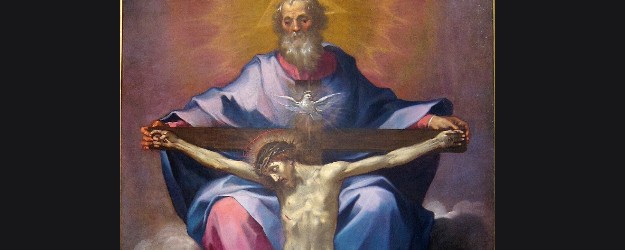
What Do Jehovah’s Witnesses Believe About Jesus?
Question One: My neighbor is a Jehovah’s Witness and she believes very different things about Jesus than I do as a Catholic. What exactly does a Jehovah’s Witness believe about Jesus compared to us Catholics?
Answer: The identity of Jesus Christ is the central question of Christian faith. For Roman Catholics, Christ is confessed as true God and true man, the eternal Son of the Father incarnate for our salvation. Jehovah’s Witnesses, however, deny His full divinity, identifying Him instead as the archangel Michael and the first creation of Jehovah. The following essay will examine the Catholic and Jehovah’s Witness concepts of Christ, their sources of authority, and their theological implications.
Catholic teaching on Christ is rooted in Scripture and developed in the great councils of the early Church. The Council of Nicaea (325) defined Christ as consubstantial (homoousios) with the Father, against Arianism, while the Council of Chalcedon (451) articulated the hypostatic union: “We confess one and the same Son, our Lord Jesus Christ, perfect in divinity and perfect in humanity, true God and true man . . . in two natures, without confusion, without change, without division, without separation.”¹ St. Thomas Aquinas underscores this truth in his Summa Theologiae, explaining that “the human nature of Christ has no personal subsistence of its own, but is assumed by the Word into unity of person” (ST III, q.2, a.6). Catholic theology also insists upon the bodily resurrection of Christ. Aquinas states, “Christ rose again with the same body in which He suffered, and this is the Catholic faith” (ST III, q.53, a.3). The Catechism of the Catholic Church affirms that Christ’s resurrection is the “crowning truth of our faith in Christ” (§638) and the foundation of Christian hope. Thus, for Catholicism, Jesus Christ is the eternal Word made flesh (John 1:14), the one mediator between God and humanity (1 Tim 2:5), and the fullness of God’s self-revelation.
Jehovah’s Witnesses, who emerged in the late nineteenth century under Charles Taze Russell, present a very different Christology. Rejecting the doctrine of the Trinity, they teach that Jesus is not God but rather Jehovah’s first creation. Their official translation renders John 1:1 as: “In the beginning was the Word, and the Word was with God, and the Word was a god.”⁵ According to their teaching, Jesus is the first of Jehovah’s creations, through whom all else was created.⁶ He is identified with Michael the Archangel both before and after his earthly life.⁷ On earth, Jesus was a perfect man but not God incarnate. At His resurrection, He was not raised in the same body in which He suffered but as a spirit creature.⁸ His death, they argue, was a ransom sacrifice for Adam’s sin, but salvation requires not only belief in this sacrifice but also faith in Jehovah, loyalty to the Watchtower organization, and dedicated evangelistic works. For this reason, Jehovah’s Witnesses honor Jesus as Messiah but refuse to worship Him, reserving worship for Jehovah alone.
The contrast between Catholic and Jehovah’s Witness Christology is stark. Catholics confess Jesus as eternal God, consubstantial with the Father, while Jehovah’s Witnesses insist He is a created being, a lesser “god.” Catholicism teaches the mystery of the Trinity, the Incarnation of the eternal Word, and Christ’s bodily resurrection in glory, whereas Jehovah’s Witnesses reject the Trinity, affirm only a functional incarnation, and hold to a purely spiritual resurrection. Catholics believe that Christ’s sacrifice communicates grace through the sacraments, while Jehovah’s Witnesses hold that His death makes salvation possible but must be combined with loyalty to their organization and works of evangelization.
The theological implications of these differences are profound. For Catholics, Christ is the full revelation of God: “In His Son, God has established with men the new and definitive covenant; He has spoken His final Word” (Dei Verbum, §4).⁹ Jehovah’s Witness theology, however, aligns with a neo-Arian perspective, reducing Jesus to a creature and thereby undermining both the mystery of the Incarnation and the reality of salvation. Catholicism teaches that salvation is nothing less than participation in the divine life itself, made possible through Christ’s divinity. As the Catechism puts it: “The Word became flesh to make us ‘partakers of the divine nature’” (§460; cf. 2 Pet 1:4). Jehovah’s Witnesses, in contrast, deny this deifying vision and present Christ as a mediator in a functional, rather than ontological, sense.
Necessary Grace and Human Freedom
Question Two: I have been told that the Jesuits and the Dominicans have some very different notions of grace. Can you explain more?
Answer: The long-standing debate between the Bañezians and the Molinists remains one of the most fascinating theological controversies in Catholic history, since it centers on the relationship between God’s grace, human free will, and divine foreknowledge. The Bañezians, followers of the Dominican Domingo Bañez (1528–1604), and the Molinists, followers of the Jesuit Luis de Molina (1535–1600), both sought to defend essential truths of the Catholic faith: that God is the first cause of salvation and that His grace is necessary for any good act (in opposition to Pelagianism), and at the same time, that human freedom is real and that God does not coerce the will (in opposition to Calvinist determinism). The theological question was and remains: how can God’s predestination and efficacious grace coexist with genuine human freedom?
The Bañezian or Dominican school responded with the doctrine of praemotio physica, or physical premotion. They taught that God moves the will infallibly to act, yet in a way that does not destroy its freedom. This divine motion is “physical,” in the sense that it is real rather than mere moral persuasion, and it is “premotion,” meaning it precedes the human free act. Within this system, a distinction is drawn between efficacious and sufficient grace. Efficacious grace is grace that actually produces a good act, because God’s premotion infallibly brings it about. Sufficient grace, by contrast, gives a real power to act, but without God’s further efficacious motion it remains unused. For the Bañezian, God’s causality is always primary; human cooperation is real but wholly dependent on God’s prior motion. This position powerfully safeguards divine sovereignty and the certainty of providence, though critics argue that it risks making freedom look like determinism under another name.
The Molinist or Jesuit position introduced the notion of scientia media, or middle knowledge. Molina argued that God knows, prior to His decrees, what any free creature would do in any given circumstance — these are called “counterfactuals of creaturely freedom.” By choosing to actualize certain circumstances, God ensures that the free choice occurs as He foresees, without coercing it. Within this system, grace becomes efficacious not because of a divine premotion, but because God has foreseen that in these circumstances, the person will freely cooperate with it. Molinists emphasize that grace does not predetermine but enables and invites, thereby preserving freedom while still maintaining God’s providential plan. This school highlights human responsibility in a striking way, though critics argue that it makes God’s decrees appear dependent on creaturely choices, thereby diminishing His sovereignty.
The dispute became so heated that the Holy See intervened. The Congregatio de Auxiliis, convened by Popes Clement VIII and Paul V between 1597 and 1607, examined the debate in detail. After years of disputation between Dominicans and Jesuits, the Pope chose not to condemn either view, leaving both as permissible theological opinions within Catholic orthodoxy. Earlier, the Council of Trent (1547) had already affirmed the necessity of grace and the reality of free will, but had deliberately left the precise mechanics of their interaction undefined.
In balance, the Bañezian school highlights the sovereignty of God and the infallibility of His grace, while the Molinist school underscores human freedom and cooperation with grace. Both represent attempts to preserve the Catholic “both/and”: salvation is entirely God’s work, and yet man is truly free and responsible. The Church continues to hold this tension as a mystery of providence and freedom, permitting both schools of thought while affirming that the truths of divine causality and human liberty are not contradictory but complementary.
Related to this discussion is the Thomistic understanding of God’s relation to time, which undergirds both approaches. St. Thomas Aquinas insists that God is not temporal but eternal, and therefore His causality must be understood in a way that transcends human categories of before and after. For Aquinas, eternity is “the simultaneously-whole and perfect possession of interminable life” (ST I, q.10, a.1), a definition taken from Boethius. God does not exist “in” time, for time measures change, while God is unchanging. Instead, God is the transcendent cause of time itself. Aquinas explains that God created the world “with time,” not “in time” (ST I, q.46, a.3), meaning that time itself began with creation. God’s eternity is thus the cause of temporal reality, while His being remains utterly simple and outside time (ST I, q.10, a.4).
The difficulty then arises: how can an eternal God know temporal and changing realities? Aquinas answers that God knows future contingents not as “future,” but as eternally present to His vision (ST I, q.14, a.13). His knowledge is not successive but simple, encompassing all times simultaneously. God sees all temporal moments in the eternal “now” of His being. Though outside time, God acts in temporal creation as its cause: He knows all creatures in their temporal existence (ST I, q.14, a.8), His providence extends even to singular details (ST I, q.22, a.3), and yet He remains unmoved (SCG III, c.66). Aquinas employs the analogy of a person on a mountaintop seeing all travelers on a winding road below at once: God’s eternal vision encompasses all of temporal succession, though creatures themselves experience it sequentially.
Finally, Aquinas distinguishes between time, aevum, and eternity. Time is the measure of motion in creatures. Aevum is the “duration” proper to angels and glorified souls: it has a beginning but no end and does not entail intrinsic change. Eternity, by contrast, is God’s own mode of existence, wholly without succession (ST I, q.10, a.5–6). The Thomistic notion, then, can be summarized as follows: God is absolutely eternal, existing as totum simul without succession or change. Time itself is created by God and began with creation. God knows all times in one eternal act of knowledge, acts in time as its cause, and yet His action is itself eternal. Eternity, aevum, and time are distinct modes of duration, of which eternity belongs to God alone.
When placed side by side, the debates between Bañezian and Molinist schools and Aquinas’s teaching on God’s eternity both reflect the Church’s constant struggle to articulate the mystery of divine providence and human freedom. God is utterly sovereign, eternal, and beyond time, yet His grace works within time to save, always respecting human freedom. Catholic theology, therefore, continues to hold both truths in tension, acknowledging that the full harmony of divine causality and human liberty will remain a mystery known completely only to God Himself.
 About Rev. John P. Cush, STD
Recent Comments