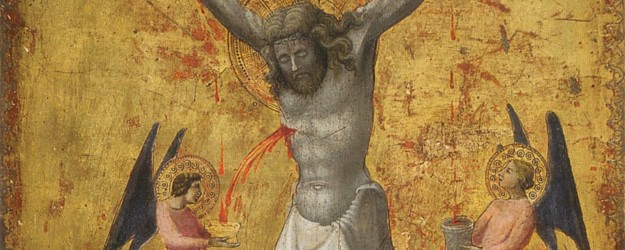
From the dawn of redemptive history, blood has signified life, binding, and atonement. In the ancient Near East, treaty oaths were ratified by the shedding of blood, signifying mutual commitment under penalty of death. In Israel, Yahweh adopted and transformed this motif, inaugurating covenants sealed not only by blood but by sacrifice, law, and promise. Over centuries, Israel’s covenant sacrificial liturgies and prophetic anticipations prepared for the climactic event in which “the blood of the covenant” would be poured out “for many for the forgiveness of sins.”1 This event — Christ’s Paschal Mystery — fulfills every previous rite, becoming the once-for-all sacrifice that inaugurates the New Covenant. In the Eucharist, that sacrifice is re-presented sacramentally, so that the Church may live perpetually in the mystery of Christ’s blood.
This essay will explore blood and covenant in the Old Testament; the Abrahamic and Sinai covenants; Levitical sacrifices and prophetic critique; Jewish and rabbinic reflections; patristic appropriations of covenantal blood imagery; scholastic synthesis of Christ’s sacrifice and the Eucharist; the once-for-all nature of Christ’s blood sacrifice; the Eucharist as true and eternal blood sacrifice; the New Testament kerygma and Christian life in light of the blood of the New Covenant; and a concluding exhortation.
Blood and Covenant in the Old Testament
Covenant (ברית:berît) denotes a solemn kinship bond — often ratified by blood — that establishes enduring familial obligations and benefits between parties. In ancient Near Eastern treaties, parties would cut animals in half and pass between the carcasses, signifying “May it be done to me as to these beasts if I break this oath.”2 Israel’s covenant at Sinai enacted this pattern with sacrificial precision: “Moses took the blood and dashed it on the people, and said, ‘Behold the blood of the covenant which the Lord has made with you in accordance with all these words.’” (Exodus 24:8, RSVCE) Here, blood conveys both the people’s oath of obedience and God’s pledge of fidelity under the gravest penalty.
The Hebrew idiom for ratifying a covenant is karat berit — literally, “to cut a covenant.” The expression preserves the memory of the ancient rite in which animals were slain, their bodies severed, and the contracting parties walked between the bloody pieces. By passing through the blood they swore that, should they violate the terms, the same death-curse would fall upon them. Thus the shedding of blood was not an incidental symbol but the solemn self-malediction that sealed the oath and made the covenant irrevocable.3
That penalty underscores the seriousness of covenant: blood is life (חַיִּים: ḥayyîm), as Leviticus teaches, “For the life of the flesh is in the blood, and I have given it to you on the altar to make atonement for your souls; for it is the blood that makes atonement by reason of the life.” (Leviticus 17:11) By offering blood, Israel acknowledges that life itself belongs to God and that only through blood-sustained atonement can communion be restored when it is broken.
Moreover, the Passover liturgy embeds sacrificial blood at the heart of redemption. Each Israelite household was to slay an unblemished lamb, smear its blood on the doorposts, and eat the roasted flesh in haste. (Exodus 12:5–7) The blood was “a sign upon the houses where you are; and when I see the blood, I will pass over you.” (Exodus 12:13) This rite was both liturgical and pedagogical as it taught Israel that divine deliverance comes through sacrificial blood — a typological anticipation of the Lamb of God who takes away the sin of the world. (Leviticus 17:11; John 1:29)
The Abrahamic and Sinai Covenants
Long before Sinai, God’s covenant with Abraham anchored salvation history in promise sealed by physical sign and divine word. God declared, “Look toward heaven, and number the stars, if you are able . . . So shall your offspring be.”4 In Genesis 15, God instructs Abram to bring animals, which he divides: “And when the sun had gone down and it was dark, behold, a smoking fire pot and a flaming torch passed between these pieces.”5 The hebrew verb עבר:āḇar (“to pass over”) here gestures at covenantal ratification in sacrificial blood, conveying a true solemnity to the event. Scott Hahn notes:
The oath by which a covenant was ratified was a conditional self-malediction (self-curse), an invocation of the divinity to inflict judgment upon the oath-swearer should he fail to fulfill the sworn stipulations of the covenant.6
That major covenant unfolds at Sinai, where Israel receives the law. The dramatic context of thunder, lightning, smoke, and trumpet blasts underscores that the Sinai covenant is not merely legal but theophanic.7 Moses sprinkles blood on the altar and the people, announcing, “This is the blood of the covenant which the Lord has made with you.” (Exodus 24:8) That blood binds Israel to God by covenantal obligation; in turn, God binds Himself to Israel in gracious promise. In essence, Moses drew a kinship bloodline between God and the people, binding them to true covenant family bond.
Pope Benedict XVI noted in Many Religions, One Covenant:
Moses sprinkles the sacrificial blood first on the altar, which represents the hidden God, and then on the people, saying, “Behold the blood of the covenant which the Lord has made with you in accordance with all these words” (Ex 24:8). Here very ancient concepts are taken up and elevated to a higher plane . . . The fictitious blood relationship thus created “makes the participants brothers of the same flesh and blood.” “The covenant creates a whole, which is peace” — Shalom. The Sinai blood ritual means that God does with these people, on their way through the desert, what until then only particular tribal associations had done; namely, he enters into a mysterious blood relationship with them, in such a way that he now belongs to them and they to him. True, the content of the relationship established here, between God and man (in itself a paradox), is defined by the word publicly declared, the “book of the covenant.” It is by appropriating this word, by the life that comes from it and with it, that the relationship — represented cultically in the ritual of the blood — comes into being.8
These twin covenants establish the pattern of promise-fulfillment and obligation-reward that underlies biblical theology. The Abrahamic covenant looks forward to a global, enduring blessing; Sinai grounds that promise in law and temple worship. Both involve blood as the sign of life given and received.
Levitical Sacrifices and Prophetic Critique
The book of Leviticus systematizes Israel’s sacrificial liturgies: sin offerings (חטאת:ḥattāt), guilt offerings (אָשָׁם:‘āšām), peace offerings (שלָמִים:shelāmîm), grain offerings, and the Day of Atonement. (Leviticus 1–7; 16) Each ritual demands unblemished sacrifice, precise execution, and blood-sprinkling “before the Lord.” (Leviticus 4:6; 16:14) Yet the multiplicity and repetition of these sacrifices signal their temporal and provisional nature: “For the law, having a shadow of the good things to come . . . can never, by the same sacrifices which they offer continually year by year, make perfect those who draw near.” (Hebrews 10:1)
The prophets underscore that ritual without righteousness displeases God, no matter how much the liturgy is offered. Amos condemns Israel: “I hate, I despise your feasts . . . even though you offer me your burnt offerings and grain offerings, I will not accept them.” (Amos 5:21–24 ) To this point, the Babylonian Talmud added,
Rabbi Elazar said: One who brings a sin offering, it is as if he offered his soul before the Holy One, Blessed be He, as it is stated: “If any man of you bring an offering unto the Lord” (Leviticus 1:2), which can be read as: “from yourselves an offering.” And the Holy One says: Not the blood of bulls do I seek, but rather that the heart be humble and contrite. For it is not the flesh of the burnt offering that is pleasing before Me, but the intention with which it is offered. Therefore, if a person brings a sacrifice but his heart is far from Me, it is as if he has not brought anything. But one who, with a broken spirit and repentant heart, even brings little, it is counted as if he offered all.9
Even the Prophet Jeremiah laments temple sacrilege: “Do you steal, murder, commit adultery . . . and go and stand before me in this house?” (Ezekiel 8:18) The prophetic critique refocuses covenant from external ritual to internal familial kinship and fidelity, preparing the way for a covenant that would be written on hearts by the Holy Spirit’s indwelling, not tablets of stone. (Jeremiah 31:33–34)
Jewish and Rabbinic Perspectives
Second Temple Judaism reflects deeply on covenant and blood in that light. Philo allegorizes sacrificial blood as the Logos guiding souls through spiritual death into the wonderful and otherwise unattainable gift of divine life.10 The Qumran community venerates the “blood of the covenant” in their Damascus Document, urging members to “stand fast in the covenant of God, sealed by blood.”11
Rabbinic literature codifies deeper reflection. The Mishnah teaches that on Pesach, “they would eat unleavened bread . . . in anticipation of the world to come,” seeing the rite as remembrance, participation, and eschatological promise.12 The Babylonian Talmud exults, “He who has never tasted the Paschal offering has not known rejoicing.”13 Midrash Rabbah envisions Moses’ blood sprinkling as transporting the priests “into the innermost sanctum of heaven.”14
Jacob Neusner observes that “for the rabbis, covenant is the legal framework par excellence by which Israel maintained its identity; it was the bloodstream of communal life, both preserving and sanctifying it.”15 Neusner’s insight highlights that rabbinic Judaism continued to see covenant as a living, blood-sequenced reality — binding God and people in perpetual dialogue and intimate kinship bond. This perpetual dialogue is found in full flourishing in liturgical life but, absent a Temple, rabbinic Judaism had to continue to develop the ongoing liturgical expression of the Jewish people. Neusner continues,
Blood stands for life; and in the cultic expression of Israel’s covenant with God, the use of blood in sacrifice and ritual communicates that the worshipper offers not merely the animal, but life itself — placed at God’s disposal. The rite of sprinkling or daubing the blood upon the altar or the people seals the covenant in life-blood, binding both parties — Israel and God — in solemn obligation. This is why the blood rite, and not merely the offering of meat or incense, remains central to Israel’s cultic theology.16
Jewish perspectives therefore situate Christian covenant theology within this rich and deeply historical matrix of typological expectation and interpretive depth, revealing that the notion of covenantal blood was far more than mere ritual residue concocted by the Christian narrative, it was carefully planned for by the divine mind since the beginning of time.
Covenantal Blood Imagery
The Church Fathers recognized that Christ’s passion and the Eucharist fulfill Old Testament types in a profound and unique way. They are virtually unanimous in this declaration. Irenaeus of Lyons writes that at the Lord’s Supper “the Lord and Creator Himself . . . proclaimed the new rite of the new covenant to be His flesh, since He was about to offer His body as a living and holy sacrifice.”17 Justin Martyr, describing the Mass, insists that the bread and wine are “the flesh and blood of that Jesus who was made flesh.”18 Tertullian exults, “The blood of Christ brought salvation; the very thing that brought death to the tyrant [Hades] is our life-giving draught.”19
In the East, Athanasius declares, “The blood of the Lamb delivered Israel from Egypt; the blood of the Son delivers the whole world from death.”20 This is echoed by figures like Cyril of Jerusalem who instructed catechumens: “When you see the Body and Blood of the Lord, recognize that what is visible is truly the Body and Blood of Christ.”21 Augustine himself marveled about the Eucharist, “Behold what you are; become what you receive,” linking Eucharistic participation to covenantal and transcendental transformation into the gift of man’s deification in Christ.22 Cyprian would therefore note,
That the old sacrifice should cease, and a new sacrifice should begin, the Lord Himself declares when He says, ‘An hour is coming when neither on this mountain nor in Jerusalem will you worship the Father.’ . . . He taught the breaking of bread and the cup of the Lord, and instructed that new sacrifices should be celebrated throughout the world . . . that the ancient sacrifice should be annulled by the new, and the old law fulfilled by the new.23
This stunning assertion by St. Cyprian reveals the apostolic Church’s recognition that the Eucharistic sacrifice is not a break from the Jewish covenantal system, but its glorious fulfillment. The blood sacrifices of the old covenant — lambs and bulls offered repeatedly — were prophetic shadows of the anticipated one perfect sacrifice, the true Lamb of God (John 1:29), whose blood ratifies the New and Eternal Covenant (Luke 22:20). In covenantal terms, blood is the irrevocable seal of kinship and ongoing communion. Thus, at every Mass, the faithful do not simply remember a past event but enter into the liturgical re-presentation of the once-for-all covenant sacrifice of Christ. This is no mere symbol; it is divine realism. The early Church Fathers understood this with an almost fiery clarity. In a world increasingly allergic to any notion of sacrifice, the Fathers thunder across time: only in the blood of the Lamb is the covenant truly and eternally sealed. The fathers clearly collectively affirm that Christ’s blood is both ratification of a New Covenant and the means by which the Church enters into divine fellowship. And this thought is greatly developed across the years of Church history.
Christ’s Sacrifice and the Eucharist
Medieval theology, especially Thomas Aquinas, articulated the ontological mechanics of sacrificial blood and the Eucharist. Aquinas teaches that Christ’s one offering “has perfected for all time those who are sanctified,” and that His blood, entering “once for all into the holy places,” obtains eternal redemption. (ST III, q. 46, a. 3) On the Eucharist, Aquinas reasons that “in this sacrament there is a sacrificial as well as a sacramental sign,” for the bread and wine, though unchanged in accidents, become by transubstantiation the very Body and Blood of Christ. (ST. III, q. 73, a. 2) Aquinas would continue,
A sacrifice, properly so called, is something done to render due honor to God in order to appease Him . . . Now Christ’s Passion was a true and proper sacrifice. As man, He suffered voluntarily out of charity, in order to render due honor to God . . . And therefore His Passion was a sacrifice. (ST. III, q. 73, a. 2)
But it wasn’t just Aquinas. In his Commentary on the Sentences, St. Bonaventure emphasizes that sacramental memory (memoria) transports the faithful mystically to Calvary, so that the single sacrifice participates in every Mass.24 If this is true, and we have every reason to believe it is, then the subsequent corollary is that every Mass becomes a unique participation in that once for all blood sacrifice of Christ, made present metaphysically. Scotus and Bellarmine later refined these insights, clarifying that the Eucharist is truly a sacrifice, not a new bloody offering but the same sacrificial event made present in an unbloody manner.25
The Council of Trent would go on to codify this teaching: “By the consecration, transubstantiation is brought about of the whole substance of the bread into the Body of Christ and of the whole substance of the wine into His Blood.”26 Trent thus sealed the medieval synthesis in a definitive manner, safeguarding the theology of ongoing covenantal liturgical blood sacrifice from willful Protestant minimization.
St. Thomas and the other scholastic teachers, with the precision of theologians and the reverence of mystics, pierce to the heart of sacrificial theology. For Aquinas especially, sacrifice is not merely ritual — it is relational and covenantal. The shedding of Christ’s blood on Calvary was not just an act of suffering; it was the supreme covenantal act, the fulfillment of all Old Testament blood rites. In every covenant of old, blood was the medium that ratified the bond between God and His people, symbolizing life poured out, commitment sealed, and divine communion initiated; blood also therefore became the means of the restoration of this covenantal communion when it was broken by sin and the violation of divine law. But those sacrifices were only types and shadows — figurae — of the one, true offering of Christ. In the Eucharist, the Church does not repeat that sacrifice, but makes it present — “re-presenting” Calvary in the mode of sacramental mystery. Here, the Lamb who was slain stands eternally offering Himself (Rev 5:6), and the faithful are swept into the divine liturgy where the covenant is not just remembered — it is renewed, constantly and for evermore. The scholastics understood: blood is the price of love, and in the Eucharist, we receive the infinitely valuable price of the very divine blood that bought our covenantal salvation.
The Finished Sacrifice of Christ
The Letter to the Hebrews proclaims that Christ’s one sacrifice “has perfected for all time those who are sanctified,” for “without the shedding of blood there is no forgiveness of sins.” (Hebrews 10:14; 9:22) Christ’s blood therefore enters “once for all into the holy places . . . obtaining eternal redemption.” (Hebrews 9:12) Against Levitical repetition that we’ve cautioned about before, Christ offers Himself once, ratifying the New Covenant predicted by Jeremiah: “Behold, the days are coming . . . when I will make a new covenant . . . I will remember their sin no more.” (Jeremiah 31:31–34) There’s a biblical depth and context at play here that we must pay attention to. Hahn notes,
In the biblical worldview, covenant is not merely a contract but a sacred kinship bond, and the means by which it is ratified is through the shedding of blood. Blood represents life (cf. Lev 17:11), and to pour it out in sacrifice is to make a solemn oath of self-donation. This is why, at Sinai, Moses sprinkled the people with blood — God and Israel were entering into a familial bond sealed by life itself. Christ fulfills this in the Eucharist, where His blood becomes the blood of the new and eternal covenant, poured out not on an altar of stone but upon the hearts of believers.27
Dr. Hahn’s insights cut to the marrow of covenantal theology. In ancient Israel, to shed blood was not only to consecrate — it was to bind souls unto death, to form a union so irrevocable that breaking it brought a curse. This is the gravity of covenant liturgy: it is not a performance, it is a pledge of lives. And this is precisely what Christ does in the New Covenant. At the Last Supper, He lifts the chalice and proclaims not only the memorial of His death — but the inauguration of the eternal covenant. His blood, like that sprinkled by Moses, is now given to us to drink, forming a bond deeper than biology: divine adoption through divine blood. This is why the Mass is not just a teaching moment or symbolic ritual, even though it is also both of those things. The mass is, without a doubt, the liturgical enactment and ongoing renewal of a cosmic, Catholic, Christ covenant, the renewal of God’s irrevocable “I do” spoken in His own blood upon Calvary. The covenant is not just remembered — it is made present, and you and I, as dear souls, are drawn into its life.
This is what’s happening at the Last Supper, as Jesus recasts Exodus 24’s blood rite: “This cup . . . is the new covenant in my blood.” (Luke 22:20) By calling it “poured out,” He alludes to His imminent sacrifice on Calvary, where blood would flow physically into the earth — a new creation symbol. What Christ began in the Upper Room, He brought to fulfillment upon Calvary, and then sealed and ratified in His Resurrection.
The Eucharist as True and Eternal Blood Sacrifice
If Christ’s death is definitive, how does that timeless event continue in the life of the Church? The answer is sacrament. Ongoing, indepth, profound participation in liturgy and sacrament. The Catechism teaches: “The Eucharist is ‘the source and summit of the Christian life’ . . . the whole Christ is truly, really, and substantially contained under the species of bread and wine.” (CCC 1324, 1374) Scott Hahn explains that the Mass is “the eschatological meal of the Kingdom of God, in which Christ’s sacrifice is sacramentally re-presented.”28 If that is the case, then we must consider Pope Benedict XVI’s wisdom:
Jesus’ death is the new sacrifice, anticipated in the Last Supper and now replacing the old sacrifices. The Eucharist is not just a meal. It is a sacrifice, the memorial of Jesus’ death that becomes present sacramentally. In the Eucharist, Jesus gives Himself, body and blood, as the new manna, the true bread of life — thus establishing a covenant not through the blood of animals, but through His own blood.29
In this masterful synthesis, Pope Benedict lays bare the radical mystery of the Eucharist: it is not a symbolic reminder of Calvary — it is Calvary, sacramentally present. There’s a deeper spiritual reality taking place that is infinitely greater than the most majestic physical reality that we witness with the eyes of our flesh. Here, the covenantal logic of blood meets the inner logic of Trinitian intimacy and brings the covenant bond of the faith with God to its divine apex. No longer is the blood of bulls or goats sprinkled on the altar (Heb 10:4). Now, the eternal High Priest enters the heavenly sanctuary not with the blood of another, but with His own, once for all: the only truly meritorious blood sacrifice. At every Mass, the Bridegroom offers again — not by dying anew, but by making present the one, perfect, irrevocable offering of love that seals, ratifies, renews, and makes present the New Covenant. In fact, the Body and Blood of Christ IS the New Covenant. This is why the Church speaks of the Eucharist as sacrificium verum et proprium — the true and proper sacrifice. Nothing else will suffice because nothing else can compare! In this liturgy, time and eternity meet in loving embrace in the space between the material and the eternal. Heaven descends. The blood of Christ speaks louder than that of Abel (Heb 12:24), not crying for vengeance, but for mercy and restoration to divine communion. And you and I, as beloved children of the covenant, are summoned not merely to witness this mystery, but to drink of it deeply, to live by it, and be transformed into it in the life of grace.
To be Catholic, therefore, is to be covenanted to Christ — not by accident of birth but by incorporation into His Body through His Blood in baptism and Eucharist. Yet the danger of complacency looms. We risk forgetting the cost of our redemption. We risk treating the Eucharist as routine. We risk taking for granted the wondrous miracle taking place before our eyes daily. Reacquainting ourselves with the language of the Church and the Scriptures about this Sacrament is all the more crucial because of complacency in a post-Christian society.
John Chrysostom exclaims, “O sacred banquet, in which Christ is eaten, the memory of His Passion is recalled, the mind is filled with grace.”30 Augustine adds, “If you believe that what you see is the Body of Christ, you are already filled.”31 Aquinas synthesizes: “The Eucharist is a sacrifice because at the moment of consecration the change . . . of bread into the Body of Christ is actualized sacramentally.” (ST III, q. 73, a. 1) Thus the unique event of Calvary becomes perpetually present, available to every generation of the faithful, from age to age, from East to West, until the end of the age and even beyond the veil of this material life.
The Kerygma and Christian Life in the Blood of the New Covenant
New Testament preaching proclaims the blood of Christ as both means of redemption and seal of the covenant. Peter declares, “You were ransomed . . . with the precious blood of Christ, like that of a lamb without blemish or spot.” (1 Peter 1:18–19) Paul traces the very source of our sanctification to that blood of Christ so benevolently shed: “In Him we have redemption through His blood, the forgiveness of our trespasses.” (Ephesians 1:7) John in similar spirituality insists, “The blood of Jesus cleanses us from all sin.” (1 John 1:7)
This kerygma shapes Christian identity and praxis. In baptism we die with Christ and rise in His blood; in the Eucharist we consume His Body and Blood to abide in Him. (Romans 6:3–4; 1 Corinthians 10:16–17) This is an ongoing reality for us until we breathe our last and rise with Him to new life in Heaven. Scott Hahn teaches, “When we receive His blood, we enter into a covenant of life and love that commits us to pour out our lives in service to others.”32 Cardinal Ratzinger insists, “The Church draws her life from the risen Christ through the Eucharist; a Church without the Eucharist is like a body without life.”33 To live in the New Covenant blood is to embrace ongoing conversion, frankly whether we like it or not. To live our life in Christ is to dwell sacramentally in Christ’s self-giving love of His own shed blood, and to bear fruit in charity by means of immersion in that wondrous blood sacrifice of our Lord and Savior. As Neusner might say, it is to ensure that the bloodstream of communal, covenantal life flows with grace rather than merely legal obligation. If that is the case, then as Dr. Edward Sri points out,
The heart of the kerygma is not just that Jesus died, but that He died as a sacrificial offering for our sins, fulfilling the Old Testament covenants. His death is not a tragic ending — it is the climactic act of covenant love, where the Lamb of God offers His own blood to establish a new and eternal relationship between God and man. In the Eucharist, this covenantal sacrifice is made present so that each person may enter into that saving mystery personally.34
Dr. Sri’s words ring with evangelical clarity: the Gospel is not a set of doctrines or moral codes — it is a proclamation of divine blood poured out in love. The kerygma — Jesus Christ loves you, died for your sins, rose again, and invites you into His life — is not abstract. It is liturgical. The cross is not a random, bloody execution; it is the altar upon which the Bridegroom seals the marriage covenant in His own blood. And where is this covenant renewed and made present? In the Holy Liturgy that is the Sacrifice of the Mass. The Eucharist is the liturgical, Sacramental embodiment of the kerygma, where we don’t merely hear the Good News — we enter it, consume it, and become it. The Lamb who was slain now gives His very life to us under the veil of bread and wine. Every time the kerygma is proclaimed, it should drive the soul to the altar — to the blood that saves, to the covenant that binds, to the Bridegroom who gives Himself still. This is our call! This is not moralism. This is not ideology. This is covenantal reality in its fullest. This is the Gospel in sacrificial sanctification and action.
Living in the Blood
From Abel’s blood to Calvary’s outpouring, divine mercy has flowed through sacrificial blood. The New Covenant is the apex of all covenants, sealed in Christ’s redemptive blood and perpetuated in the Eucharist. There will be no other. This is the New and Eternal Covenant in Christ, the final and ultimate covenant mediator. The ancient sacrifices anticipated the Lamb; the Fathers proclaimed His self-offering; the scholastics explained its ontological reality; the kerygma summons us to live in its transformative and dynamic power. Archbishop (soon to be Blessed) Fulton Sheen would sober us thus:
The greatest love story of all time is contained in a tiny white Host. In that Host is the covenant of love written not in ink but in the blood of the Lamb. To receive it is to be drawn into a drama of sacrifice, of self-giving, of redemption. We are not spectators — we are participants. The Mass is not something we “attend”; it is something we live.35
Sheen pierces through our modern tendency to separate devotion from transformation, and thereby through our apathy and materialist worldview. The Eucharistic sacrifice is not a distant ritual or a weekly obligation — it is the covenantal core of our very identity. This is not what we do, it is who we are. To live as a Christian is to live cruciform, because the Mass is not merely a remembrance of the Cross, but the re-presentation of the total self-gift of Christ. And in covenant theology, what is sacrificed is also what is shared. Christ does not offer His blood so we can remain unchanged; He offers it so that we may be conformed to His image and made participants in His mission. The salvation of all souls hinges upon this profound gift of Christ’s Body and Blood! To receive the Eucharist is to say “Amen” not only to the Real Presence but to the real calling: to unite ourselves to Christ, to embrace our Cross as He did, to die to self, to pour out our lives, to love Him and then all mankind to the end. This is the radical logic of the covenant — sealed in blood, lived in self-gift, and renewed in every Mass. It is not just about going to church. It is about becoming the sacrifice with Him and drawing all others to this wondrous banquet. This is the image of love. If we truly love others, then the Eucharistic banquet is where we must lead them.
Knowing all this, and in the wake of this magnificent Eucharistic Revival our nation is undergoing, let us approach the altar with reverent hearts, conscious that we draw from the fount of eternal life. May our prayers, sacrifices, and works of mercy spring from the outpouring of Christ’s blood. Immerse yourselves, then, in the mystery of the blood of the New Covenant, that its life-giving power may transform you fully into His image, for the glory of the Father and the building up of His kingdom here on earth.
- John H. Walton, Ancient Near Eastern Thought and the Old Testament (Grand Rapids: Baker Academic, 2006), 118–20. ↩
- Michael D. Coogan, “Treaty and Covenant,” in The Oxford Companion to the Bible, ed. Bruce M. Metzger and Michael D. Coogan (New York: Oxford University Press, 1993), 861–62. ↩
- Meredith G. Kline, The Structure of Biblical Authority (Grand Rapids: William B. Eerdmans, 1972), 101. ↩
- Genesis 15:17; Robert Alter, The Art of Biblical Narrative (New York: Basic Books, 1981), 113. ↩
- Genesis 15:17; Robert Alter, The Art of Biblical Narrative (New York: Basic Books, 1981), 113. ↩
- Scott W. Hahn, “From Old to New: ‘Covenant’ or ‘Testament’ in Hebrews 9?,” unpublished paper, p. 24, accessed April 22 2025, www.scotthahn.com/s/LS-8-Hahn-Hebrews.pdf. ↩
- Deuteronomy 4:11–12; Gregory K. Beale, The Temple and the Church’s Mission (Downers Grove, IL: InterVarsity Press, 2004), 181. ↩
- Joseph Ratzinger, Many Religions, One Covenant: Israel, the Church, and the World, trans. Graham Harrison (San Francisco: Ignatius Press, 1999), 59–60. ↩
- Babylonian Talmud, Menachot 110a, as translated and adapted from Sefaria: www.sefaria.org/Menachot.110a.1?lang=bi. This passage is a synthesis of rabbinic commentary on sacrificial intention, combining references also found in Berakhot 5b and Tosefta Menachot 13:11. ↩
- Philo of Alexandria, “On the Preliminary Studies,” in Philo (Loeb Classical Library), vol. 1, trans. Ralph Marcus, 167. ↩
- Damascus Document 4:15, in James H. Charlesworth, ed., The Dead Sea Scrolls: Hebrew, Aramaic, and Greek Texts with English Translations (Princeton: Princeton University Press, 2004), 1:470. ↩
- Mishnah, Pesachim 10:1. ↩
- Babylonian Talmud, Pesachim 116b. ↩
- Midrash Rabbah, Exodus Rabbah 31:6, in William G. Braude and Israel J. Kapstein, eds., The Midrash on Exodus (New Haven: Yale University Press, 1979), 341. ↩
- Jacob Neusner, Judaism: The Evidence of History, 2nd ed. (Hanover, NH: University Press of New England, 2006), 214. ↩
- Jacob Neusner, The Idea of Purity in Ancient Judaism (Leiden: Brill, 1973), 115. ↩
- Irenaeus of Lyons, Against Heresies 4.18.5, in The Apostolic Fathers with Justin Martyr and Irenaeus (Loeb Classical Library), vol. 1, trans. Alexander Roberts and William Rambaut, 345. ↩
- Justin Martyr, First Apology 66, in The Ante-Nicene Fathers, vol. 1, ed. Alexander Roberts and James Donaldson, 190. ↩
- Tertullian, On the Resurrection of the Flesh 48, in The Ante-Nicene Fathers, vol. 3, ed. Alexander Roberts and James Donaldson, 294. ↩
- Athanasius, Against the Heathen 45, in A Select Library of Nicene and Post-Nicene Fathers, Series 2, vol. 4, ed. Philip Schaff and Henry Wace, 224. ↩
- Cyril of Jerusalem, Catechetical Lecture 22.9, in The Nicene and Post-Nicene Fathers, Series 2, vol. 7, ed. Philip Schaff, 293. ↩
- Augustine, Sermon 272, in The Works of Saint Augustine: A Translation for the 21st Century, vol. 1, ed. John E. Rotelle (Hyde Park, NY: New City Press, 1990), 905. ↩
- Cyprian of Carthage, Epistle 63: To Caecilius, On the Sacrament of the Cup of the Lord, in The Ante-Nicene Fathers, vol. 5, ed. Alexander Roberts and James Donaldson (Buffalo, NY: Christian Literature Publishing Co., 1886), 362. ↩
- Bonaventure, Commentary on the Sentences, dist. 1, pt. 2, d. 3, q. 1, a. 2. ↩
- Duns Scotus, Ordinatio I, d. 27, q. 1; Robert Bellarmine, De Sacramentis II. ↩
- Council of Trent, Sess. XXII, “Decree on the Most Holy Eucharist” (1562), in The Canons and Decrees of the Sacred and Oecumenical Council of Trent, trans. J. Waterworth (London: Dolman, 1848), 46. ↩
- Scott Hahn, A Father Who Keeps His Promises: God’s Covenant Love in Scripture (Cincinnati: St. Anthony Messenger Press, 1998), 108. ↩
- Scott Hahn, Covenant and Communion: The Biblical Theology of the Eucharist (Downers Grove, IL: InterVarsity Press, 2006), 53–54. ↩
- Joseph Ratzinger (Pope Benedict XVI), Jesus of Nazareth: Holy Week — From the Entrance into Jerusalem to the Resurrection (San Francisco: Ignatius Press, 2011), 133. ↩
- John Chrysostom, Homilies on First Corinthians 24.6, in The Fathers of the Church, vol. 37, ed. Robert C. Hill (Washington, DC: Catholic University of America Press, 1985), 453. ↩
- Augustine, Sermon 272, 905. ↩
- Scott Hahn, The Lamb’s Supper: The Mass as Heaven on Earth (New York: Doubleday, 1999), 131. ↩
- Joseph Ratzinger (Pope Benedict XVI), God Is Near Us: The Eucharist, the Heart of Life (San Francisco: Ignatius Press, 2003), 23. ↩
- Edward Sri, A Biblical Walk Through the Mass: Understanding What We Say and Do in the Liturgy (West Chester, PA: Ascension Press, 2011), 56. ↩
- Fulton J. Sheen, Life of Christ (New York: McGraw-Hill, 1958), 219. ↩
 About Marcus Benedict Peter
Speak Your Mind