Editor’s Note: This essay is the second installment of three on synodality and diocesan life. You may find the first installment HERE.
Part Two: What Is Synodality?
Synodality is the “expression of the Church’s nature, her form, style and mission.”1 It is a word that comes “from the ancient and constant ecclesial practice of meeting in synods” (Final Document, no. 28), gatherings that have taken different forms throughout the centuries but that were all united by the fact that, through them, the Church came “together to dialogue, discern and decide” (Final Document, no. 28). The earliest testimony of synodality comes from Scripture itself. There, in the Acts of the Apostles, we find evidence of the way in which the apostolic community lived the common responsibility to hand on and testify to the Gospel of Jesus Christ. They did so by relying on “the presence of the risen Lord” through the gift of his Holy Spirit and by constantly “listening to the Spirit’s voice and discerning the way to go” (Synodality in the Life and Mission of the Church, nos. 19–20).
Accordingly, synodality is a novel word that describes and suggests ways to embody something that is at the heart of the Christian faith, namely, the notion of communion. The Final Document expands on this idea by explaining that the concept of communion is one that the Church used from the very beginning to express the substance of her mystery and mission (Final Document, no. 31). It is a reality on which the Second Vatican Council placed a special emphasis and that we need to understand and embody more and more. In fact, the idea of synodality is rooted in the teachings of the Second Vatican Council and represents an act of reception of the Council that draws upon its vision and reinvigorates it for today (Final Document, no. 5). In particular, one of the synod’s main goals was “putting into practice what the Council taught about the Church as Mystery and [the] Church as [the] People of God, called to holiness through a continual conversion that comes from listening to the Gospel” (Final Document, no. 5). Since it is so essential to synodality, let us delve deeper into what the Second Vatican Council, drawing upon the riches of Scripture and the Church’s living Tradition, taught about the nature and mission of the Church.
As the Vatican II Dogmatic Constitution on the Church Lumen Gentium explains, the Church, the holy People of God, is a communion gathered by the Holy Spirit so that it may journey together in its earthly pilgrimage toward the Lord. Drawing on the Council, the Final Document describes that “the Church’s vocation and prophetic service (cf. Lumen Gentium, no. 12) consist in witnessing to God’s plan to unite all humanity to Himself in freedom and communion. The Church,” the document continues, “is ‘the kingdom of Christ already present in mystery’ (Lumen Gentium, no. 3) and ‘the seed and the beginning of the kingdom on earth’ (Lumen Gentium, no. 5). It, therefore, walks together with all humanity [. . .] while it ‘aspires after the completion of the kingdom’ (Lumen Gentium, no. 5) when God will be ‘all in all’ (1 Corinthians 15:28)” (Final Document, no. 20). Synodality is a way for the Church to place at the center of her life and teaching a twofold mystery. First, that the Christian community created by Baptism is the place where individuals experience communion with the God who is Father, Son, and Holy Spirit. Second, that such a communion with the Triune God into which the individual is grafted is also the source of unity and communion with all her Christian brothers and sisters. Here we see the profound connection between synodality and the Church’s sacramental life and theology.
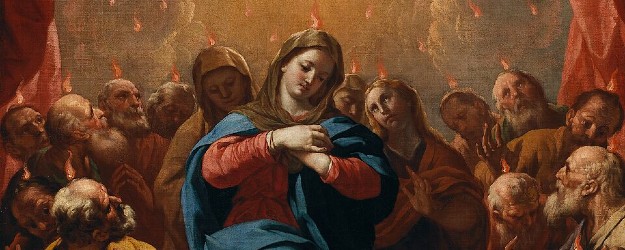
Baptism is the foundation of our entire Christian life, and reflecting on synodality invites us to recover the depth and beauty of what happens to each one of us when we are baptized. Baptism, the Final Document explains, “introduces everyone to the greatest gift, which is to be children of God, that is, to share in Jesus’ relationship to the Father in the Spirit. There is nothing higher than this baptismal dignity, equally bestowed upon each person, through which we are invited to clothe ourselves with Christ and be grafted onto Him like branches of the one vine” (Final Document, no. 21). Furthermore, the synodal journey invites us to discover anew that in the Eucharist we find the “source and summit of the whole Christian life” (Lumen Gentium, no. 11). The Eucharistic assembly is a prime realization of synodality, since in it we see the unity and harmony that being nourished by the Word of God and receiving the Lord’s sacramental presence make possible. It is a unity that does not deny our different backgrounds, charisms, and roles but that transforms us into the one Body of Christ instead (Final Document, nos. 26–7). The synod’s conclusions insist on this latter claim by pointing us to Saint Paul’s teachings: “‘Because there is one bread, we who are many are one body, for we all partake of the one bread’ (1 Corinthians 10:17). The Church nourished by the Sacrament of the Body and Blood of the Lord,” the document comments, “is constituted as His Body (cf. Lumen Gentium, no. 7): ‘you are the body of Christ and individually members of it (1 Corinthians 12:27)’” (Final Document, no. 16). Finally, synodality also encourages us to meditate on the sacrament of confirmation and the mystery of Pentecost whose grace it effectively communicates to those who receive it. As the Final Document explains, “the Spirit with whom Jesus was filled (cf. Luke 4:1), who anointed Him and sent Him to proclaim the Gospel (cf. Luke 4:18), is the same Spirit poured out on believers. This sanctifying anointment seals their belonging to God. [. . .] It renews in us the miracle of a Church stirred up by the fire of mission, with the courage to go out onto the streets of the world with the ability to be understood by all peoples and cultures” (Final Document, no. 25).
The latter point is essential: synodality is not an end in itself. As Pope Leo XIV recently explained, it is “a path of communion orientated to the mission.”2 As such, synodality is completely at the service of announcing the Gospel to contemporary men and women. In its focus on communion, synodality emphasizes that the intimate bonds with God and one another are not for their own sake but that God gathers a people unto himself so that it may reach everybody and touch all with the good news of the Gospel. Thus, the unity the Holy Spirit creates is for the sake of mission. All the baptized, no one excluded, have received the calling to become a missionary disciple, that is, “joyful messengers of challenging proposals, guardians of the goodness and beauty which shine forth in a life of fidelity to the Gospel” (Evangelii Gaudium, no. 168). That does not mean that we will all accept such a God-given vocation. The fact remains, though, that each member of the Body of Christ is called by God to be a sacrament of salvation for the whole world. As the Final Document explains, in fact, “all believers are called to contribute to [the Church’s missionary] impetus, accepting the charisms that the Spirit distributes abundantly to each one and committing themselves to place these at the service of the [Kingdom] of God with humility and creative resourcefulness” (Final Document, no. 25).
Responding to the Lord’s call to be “salt of the earth” (Matthew 5:13) and “light of the world” (Matthew 5:14) requires a twofold conversion. On the one hand, all Christians need to hear Jesus’ invitation to the disciples to follow him (cf. Mark 1:17) and go preach the kingdom of God (cf. Matthew 9:2) as one that is addressed to each of them. All the baptized have received the Holy Spirit, which means that we must all abide by Saint Peter’s beautiful request in his first letter: “As each has received a gift,” he tells us, “employ it for one another, as good stewards of God’s varied grace” (1 Peter 4:10). On the other hand, the Church’s pastors need to “expand possibilities for participation and for the exercise of differentiated co-responsibility by all the Baptised” (Final Document, no. 36). The role of pastors, in fact, is to recognize, discern, and bring together in unity the gifts that the Spirit pours out on individuals and communities so that they may be used for the common good (Final Document, no. 69). Here it is worth emphasizing that synodality is not against the authority that the sacrament of Holy Orders confers to pastors. To the contrary, the Final Document recognizes that such an authority “is a specific gift of the Spirit of Christ the Head for the upbuilding of the entire Body” (Final Document, no. 33, quoting from Synodality in the Life and Mission of the Church, no. 67). “Synodality,” it continues, “offers ‘the most appropriate interpretive framework for understanding the hierarchical ministry itself’ and provides the correct context for understanding the mandate that Christ entrusts, in the Holy Spirit, to pastors” (Final Document, no. 33). Synodality helps us appreciate how ordained ministers are at the service of the holy People of God by making available to them the grace of the sacraments, teaching and safeguarding the authentic faith, and promoting ecclesial communion at all levels (Final Document, no. 33).
Still, without subverting the fundamental and God-given constitution of the Church, we might need to reform some of her structures and practices. In fact, the new appreciation of the role each Christian plays, according to the person’s gifts and state of life, in God’s plan for salvation demands that we look carefully at our communities to see whether there are obstacles that prevent the Church from responding to the Lord’s call fully. As Joseph Ratzinger explained in his book Called to Communion, “The reform that is needed at all times does not consist in constantly remodeling ‘our’ Church according to our taste, or in inventing her ourselves, but in ceaselessly clearing away our subsidiary constructions to let in the pure light that comes from above and that is also the dawning of pure freedom.”3 Ultimately, the Final Document explains, “synodality is a path of spiritual renewal and structural reform that enables the Church to be more participatory and missionary so that it can walk with every man and woman, radiating the light of Christ” (Final Document, no. 28).
By rooting it in Scripture, the Church’s history, and the reflections of the magisterium on the nature and mission of the Church, the Final Document helps us see that to speak of synodality is to speak with a new concept of some of the central and perennial aspects of what it means to be a Christian disciple. In the end, love and communion are the center of the Christian life. “Beloved,” the apostle John writes in his first letter, “let us love one another, because love is of God; everyone who loves is begotten by God and knows God. Whoever is without love does not know God, for God is love” (1 John 4:7). Insisting once again on the connection between synodality and the notion of communion, the Final Document explains that “synodality ‘is the specific modus vivendi et operandi of the Church, the People of God, [that is, synodality is a way of living and acting] which reveals and gives substance to [the Church’s] being as communion when all her members journey together, gather in assembly and take an active part in her evangelizing mission”” (Final Document, no. 31, quoting from Synodality in the Life and Mission of the Church, no. 6). To think of communion and mission as two of Christianity’s essential elements comes straight from the Gospel. There, Jesus prayed that His followers might be “one, as you, Father, are in me and I in you, that they also may be in us, that the world may believe that you sent me” (John 17:21), thus linking the two essential dimensions of the Christian life that synodality wants to emphasize.
Now, were the Church already living the communion and missionary zeal the Lord called his disciples to and embody these principles in all her structures and practices, we would not need to talk about synodality. But this is not the case. We often do not let what the Church teaches shape our lives and the lives of our communities. Rather than being a communion in which all people participate in the mission to evangelize, we often live the faith with the same individualism, indifference, isolation, and lack of engagement that mark our broader culture (Final Document, no. 48). We are also tempted to exercise leadership with paternalistic or authoritarian attitudes (Final Document, no. 62) that are self-serving and concerned with power and status (Final Document, no. 74) rather than as a form of service to the holy People of God (Final Document, no. 33). We find, the Final Document reminds us, that “many of the evils that afflict our world are also visible in the Church” (Final Document, no. 55). We, too, experience the pain of barriers that divide us, disagreements that poison our relationships, and the constant temptation to exclude those who are different from us (think, for example, about how difficult it often is for English and Spanish-speaking members of parishes to find ways to live the faith together). Most of all, we are painfully aware that “the abuse crisis, in its various and tragic manifestations, has brought untold and often ongoing suffering to victims and survivors, and to their communities” (Final Document, no. 55). In fact, it is impossible to understand the Pope’s insistence on synodality without keeping in mind the recent history of scandals and abuse (Final Document, no. 46). Among other things, such an emphasis is a corrective to the mentality of prideful elitism and cover-up that made abuse possible. It is a humble recognition that we must face the evils in the Church, ask for forgiveness, care for victims and survivors, provide for preventative measures, and strive in the Lord to rebuild mutual trust (Final Document, no. 55). The Church must listen to those who have been wounded by her members or who suffer marginalization or exclusion because “taking on the burden of wounded relationships is part of [her] mission. The Church does this,” the Final Document explains, “in order that the Lord, the Living One, [may] heal them. This is the only way that the Church can be ‘as a sacrament or instrumental sign of intimate union with God and of the unity of all humanity’ (Lumen Gentium, no. 1)” (Final Document, no. 56).
Thus, the closer collaboration and missionary cooperation among all the Church’s members that the present moment makes necessary might very well call for reform in some facets of how the Church operates. Francis encourages us to ask “if we are really communities truly open and inclusive of all; if we cooperate, as priests and laity, in the service of the Gospel; and if we show ourselves welcoming, not only in words but with concrete gestures, to those both near and far, and all those buffeted by the ups and downs of life.”4 All the baptized should ask themselves, “What can I do for the Church?” Amid the current difficulties, Francis teaches, Christians are not called to complain about the Church but to commit themselves to her anew so that they may all participate in the Church’s life and mission with passion and humility. “With passion,” Francis explains, “because we must not remain passive spectators; with humility, because being committed within the community must never mean taking center stage, considering ourselves better and keeping others from drawing near. That is what a synodal Church means: everyone has a part to play, no individual in the place of others or above others. There are no first or second class Christians; everyone has been called.”5
Now that I have described the theological foundations of synodality, let me complete my description by giving an account of the attitudes and practices that characterize a synodal Church. This, in turn, will set the stage for the question the next installment in this three-part series will consider, namely, how we can live synodality out in diocesan life.
The Final Document highlights six aspects that make the Church synodal. First, a synodal Church is a relational Church that is close to people because it is “God’s home and family” (Final Document, no. 28). Second, it is a Church that walks together “with Christ and towards God’s kingdom, in union with all humanity” (Final Document, no. 28). Third, it is a Church oriented to mission and, fourth, that gathers at all levels for “mutual listening, dialogue, and community discernment” (Final Document, no. 28). Fifth, it is a Church that seeks to “reach consensus as an expression of Christ rendering himself present” (Final Document, no. 28). And sixth, it is a Church that reaches “decisions according to differentiated co-responsibilities” (Final Document, no. 28). Let me unpack these six features.
A synodal Church is relational because relationships are necessary for authentic human flourishing. We need for the Church to be rich in interpersonal relationships flowing from the mutual love that constitutes the new commandment Jesus left to his disciples. In this way, we will bear witness to the power of relationships that find their source in the outpouring of the Holy Spirit which the Trinity’s generosity and love for humankind makes possible (Final Document, no. 34). Here, the Final Document emphasizes the beautiful image of the Church as a home, “a sacrament of encounter and salvation, a school of communion for all the sons and daughters of God” (Final Document, no. 115). The Church is also the People of God walking with Christ: everyone is called to be a pilgrim of hope in it.
A synodal Church is made up of people who walk together because she follows in Jesus’ footsteps. The entire Gospel is a story of encounters. Jesus embodies a closeness, a compassion, a tenderness, and a passion for each person that the Church is called to imitate and make normative. Francis emphasizes this in the homily he preached at the opening of the synod. We are “called to become experts in the art of encounter.”6 We should not become experts at “organizing events or theorizing about problems,” but instead learn to take the “time to encounter the Lord and one another. Time to devote to prayer and to adoration [. . .] and to hearing what the Spirit wants to say to the Church. Time to look others in the eye and listen to what they have to say, to build rapport, to be sensitive to the questions of our sisters and brothers, to let ourselves be enriched by the variety of charisms, vocations and ministries. Every encounter — as we know — calls for openness, courage and a willingness to let ourselves be challenged by the presence and the stories of others. [. . .] The experience of encounter changes us; frequently it opens up new and unexpected possibilities.”7 Furthermore, a synodal Church must listen to people because, following the example of the Word incarnate, she is called to become an “expert in humanity” (Gaudium et Spes, no. 1). Anything that is “genuinely human” should raise an echo in her heart (Gaudium et Spes, no. 1). As Christians, we are called to listen to our brothers and sisters in the faith and to all people God puts in our paths so that, as the Second Vatican Council taught us, “the joys and the hopes, the griefs and the anxieties” of our contemporaries might become our own and find consolation and answer in the Lord who is present in our midst (Gaudium et Spes, no. 1). Overall, a synodal Church is one that journeys with people, that encounters, and listens to them — a Church that embodies God’s style, as Francis likes to call it, which is always one of closeness, compassion, and tenderness.8
A synodal Church is one devoted to mission because, after the Resurrection, Jesus gave the disciples the gift of his peace and sent them to proclaim the kingdom of God by offering to every person without exception the mercy and love of the Father (Final Document, no. 140). Christ’s peace dwells in our hearts through the Holy Spirit, and Scripture describes it as fullness of life, the realization of all our hopes and expectations that comes from Christ and Christ alone. It is the “harmony with God, with sisters and brothers, and with creation” for which we are made and that our hearts long for (Final Document, no. 140).
A synodal Church spends time in mutual listening, dialogue, and community discernment so that it may reach consensus. This is because our common Baptism gives all members of the Church an equal dignity that requires us to learn mutuality and reciprocity (Final Document, no. 36). Furthermore, a synodal Church trusts that, by pursuing a path of conversion and careful discernment, she will be able to “hear what the Spirit says to the churches” (Revelation 2:6) by staying rooted in the experience of the holy People of God. Paying attention to their experience is important because, thanks to the Holy Spirit, the holy People of God possesses an instinct for the truth of the Gospel — what the Church calls the sensus fidei (Final Document, no. 22). This process of listening to the People of God, the Final Document clarifies, is not to be “confused with public opinion” (Final Document, no. 22), so much so that it always requires the discernment of pastors and demands the ongoing purification and conversion of all those who participate in it. It is a process that calls for “interior freedom, humility, prayer, mutual trust, an openness to the new and a surrender to the will of God. It is never just a setting out of one’s own personal or group point of view or a summing up of differing individual opinions” (Final Document, no. 82). In the end, the ecclesial discernment synodality calls for is “a spiritual practice grounded in a living faith” (Final Document, no. 82) that is made possible “only by recognising the primacy of grace” (Final Document, no. 44). Unless the practice of mutual listening and common discernment is a “place and form of encounter with God” (Final Document, no. 44), it quickly becomes a mere organizational expedient. But a new organizational strategy is not what we need. We need a Church more capable of nurturing relationships with the Lord and with others. It is not a matter of strategy or organizational effectiveness. Relationships and bonds are the means by which God the Father has revealed himself in Jesus and the Spirit. Thus, they are an essential part of the Christian life and testimony. Synodality suggests concrete attitudes and practices that help us make these new relationships that flow from a renewal of grace possible (Final Document, no. 50).
This leads us to the last feature of a synodal Church, namely, the notion of co-responsibility. Co-responsibility entails both an enlargement of the participation of all the People of God in decision-making processes and a respect for their different gifts, abilities, and roles, including the pastors’ teaching and governing authority (Final Document, no. 87). The Synod of Bishops is very forceful in affirming this latter point. “In a synodal Church, the authority of the Bishop, of the Episcopal College and of the Bishop of Rome in regard to decision-taking is inviolable as it is grounded in the hierarchical structure of the Church established by Christ; it both serves unity and legitimate diversity. [. . .] It is not appropriate,” the document continues, “to set the consultative and deliberative elements involved in reaching a decision in opposition to each other: in the Church, the deliberative element is undertaken with the help of all and never without those whose pastoral governance allows them to take a decision by virtue of their office” (Final Document, no. 92). There is no competition or conflict between the moment of consultation and the moment in which those with the proper authority take a decision. The whole point of a synodal conversion is to create practices of common discernment that ensure that “the decisions taken are the fruit of the obedience of all to what God wants for His Church” (Final Document, no. 90). In fact, authority in the Church exists to pay attention to and receive Christ and His will (Final Document, no. 91). If we were to summarize synodality’s understanding of ecclesial discernment, we could do so with the following motto: nothing without the bishop, nothing without the clergy, and nothing without the people (Final Document, no. 88).9
Let me bring this installment to a close by pulling together the various threads of our reflection so far. Synodality is a way of being and acting that helps the Church live the communion and mission to which the Lord summons her by suggesting concrete attitudes and practices that help her embody those commitments in all aspects of her life. Above all, the Final Document explains, the heart of synodality “is a call to joy and to the renewal of the Church in following the Lord, in committing to service of His mission, and in searching for ways to be faithful” (Final Document, no. 3). It is a call that involves all Christians, no one excluded, because we are all disciples chosen and empowered by the Lord to be “protagonist of mission” (Final Document, no. 4).
- Francis, “Address to the Faithful of the Diocese of Rome,” September 18, 2021. ↩
- Leo XIV, “Concluding Address to the Extraordinary Consistory,” January 8, 2026. ↩
- Joseph Ratzinger, Called to Communion: Understanding the Church Today (Ignatius Press, 1996), 140. ↩
- Francis, “Homily for the Canonization of Artemide Zatti and Giovanni Battista Scalabrini,” October 9, 2022. ↩
- Francis, “Homily for the Solemnity of Saints Peter and Paul,” June 29, 2022. ↩
- Francis, “Homily for the Opening of the Synodal Path,” October 10, 2021. ↩
- Francis, “Homily for the Opening of the Synodal Path.” ↩
- Francis, “Angelus,” February 14, 2021. ↩
- In another section, the document employs the image of a symphonic orchestra where the communitarian (all), collegial (some), and personal (one) dimensions of the Church all work together in harmony (Final Document, no. 130). ↩
 About Dr. Alessandro Rovati
Alessandro,
Thank you for a master description of Synodality. At the end of each paragraph i bowed my head in agreement and shook my head in wonder at why we do not experience the reality in parish life. This Lent I experiennce of the violence and despair of moving from one era to another, without the beautiful way of Synodality. It is like living in a dark cloud; once in a while, there is a strike of lightning that exposes the need to live the Paschal Mystery. My vision comes from FAITH OF THE ANCIENTS: ‘Faith is the realization of what is hoped for and evidence of things not seen.” Heb 1:11 Is that LOVE of CHRIST?